

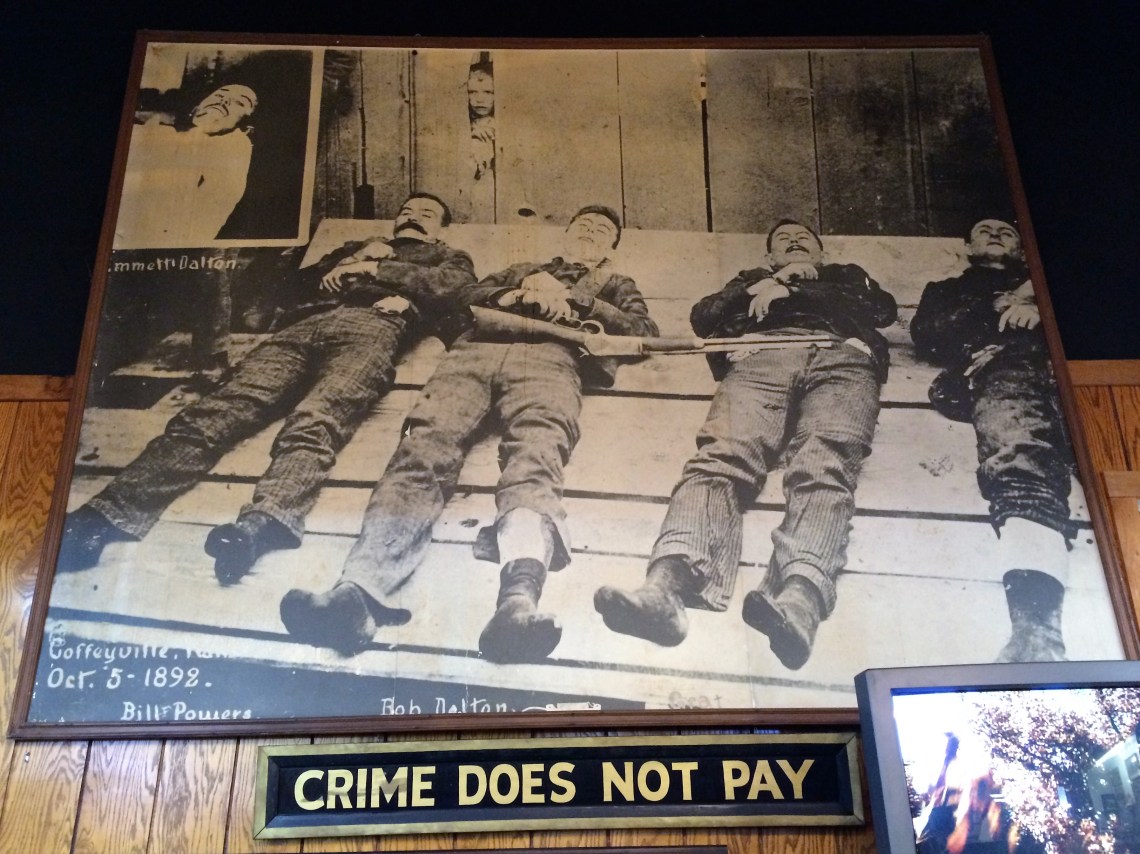
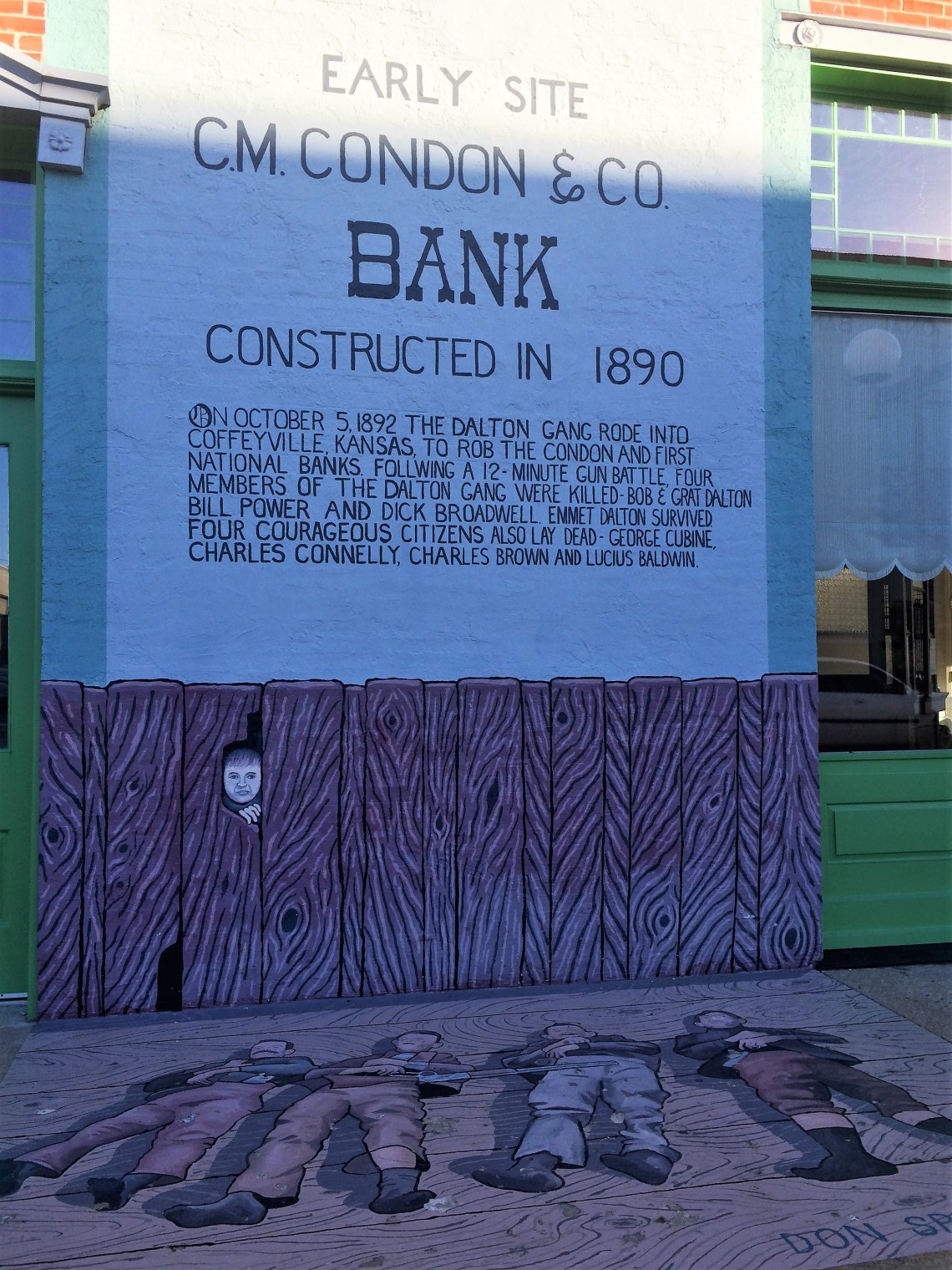
In October of 1892, five outlaws rode their horses into Coffeyville, Kansas with plans to rob two banks simultaneously. None of them would ride those horses back out of town. Four would be shot and killed, and the fifth would wind up with 23 gunshot wounds and a ticket to prison.
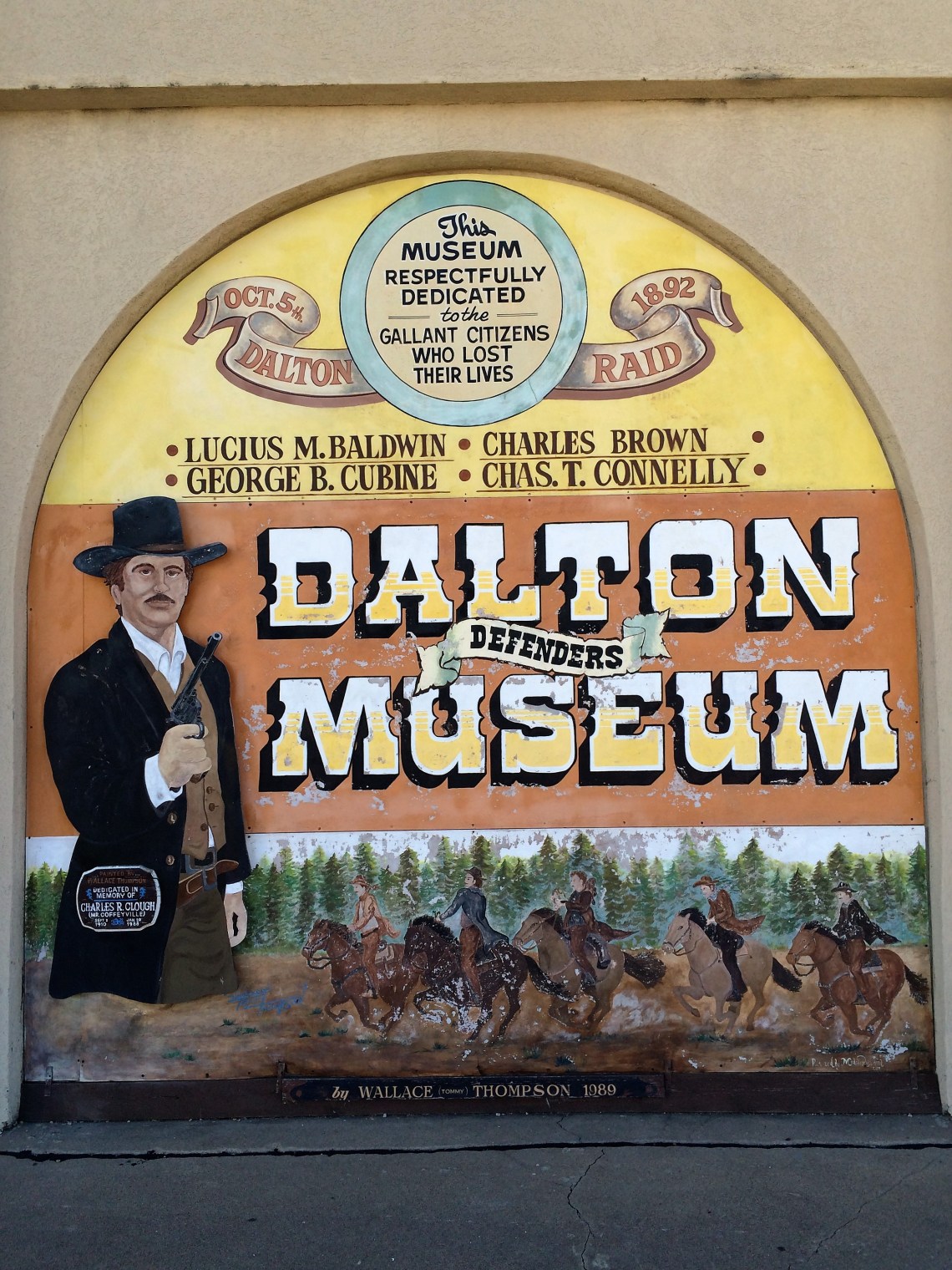
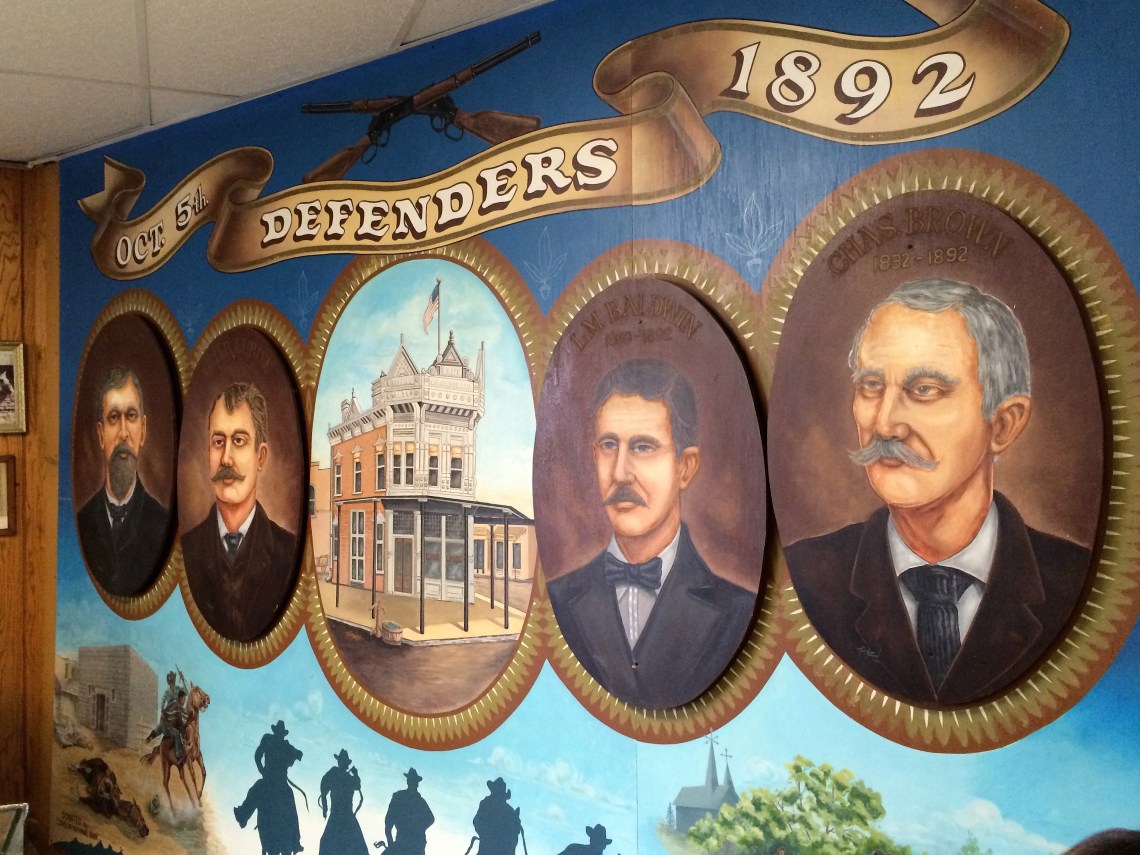
The Dalton Defenders Museum, in downtown Coffeyville, was quite an interesting stop for us. Dedicated to the men who fought the outlaws and lost their lives defending their town, the museum was our first stop in Coffeyville. The kind couple inside gave us some history on their town, told us about that notorious day in 1892, and were as sweet as could be to the girls. Brent and Magada Craven couldn’t have been any nicer, and we enjoyed meeting them as much as we did visiting the museum.

We started our tour by looking through a couple of rooms full of items from the past, all which were donated from people in the area. The girls got to see old typewriters, curling irons, clothes irons, baby carriages, and a hearse. Brent put the girls up in the carriage seat of the old hearse so they could feel what it would be like to take the reigns.
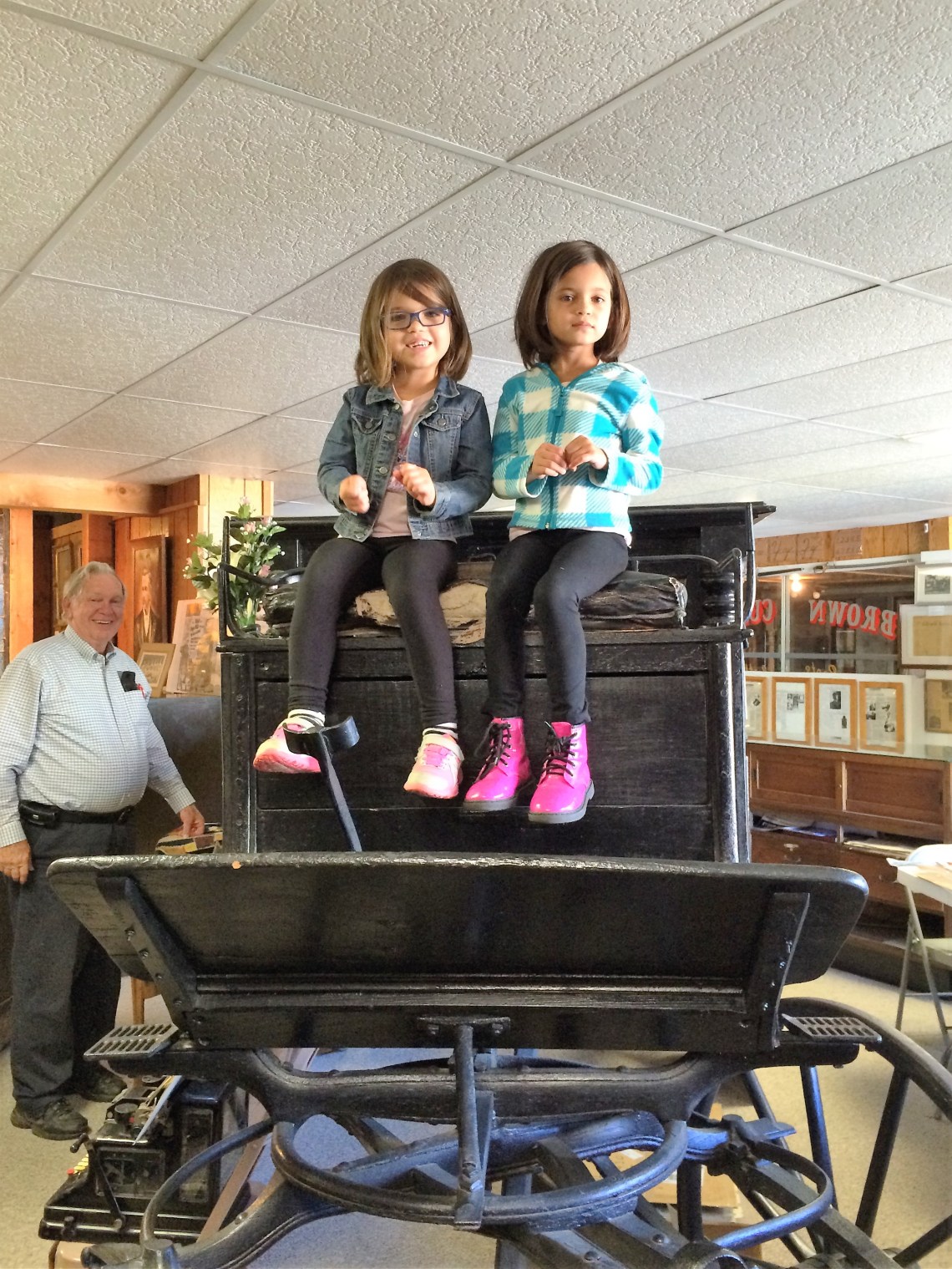
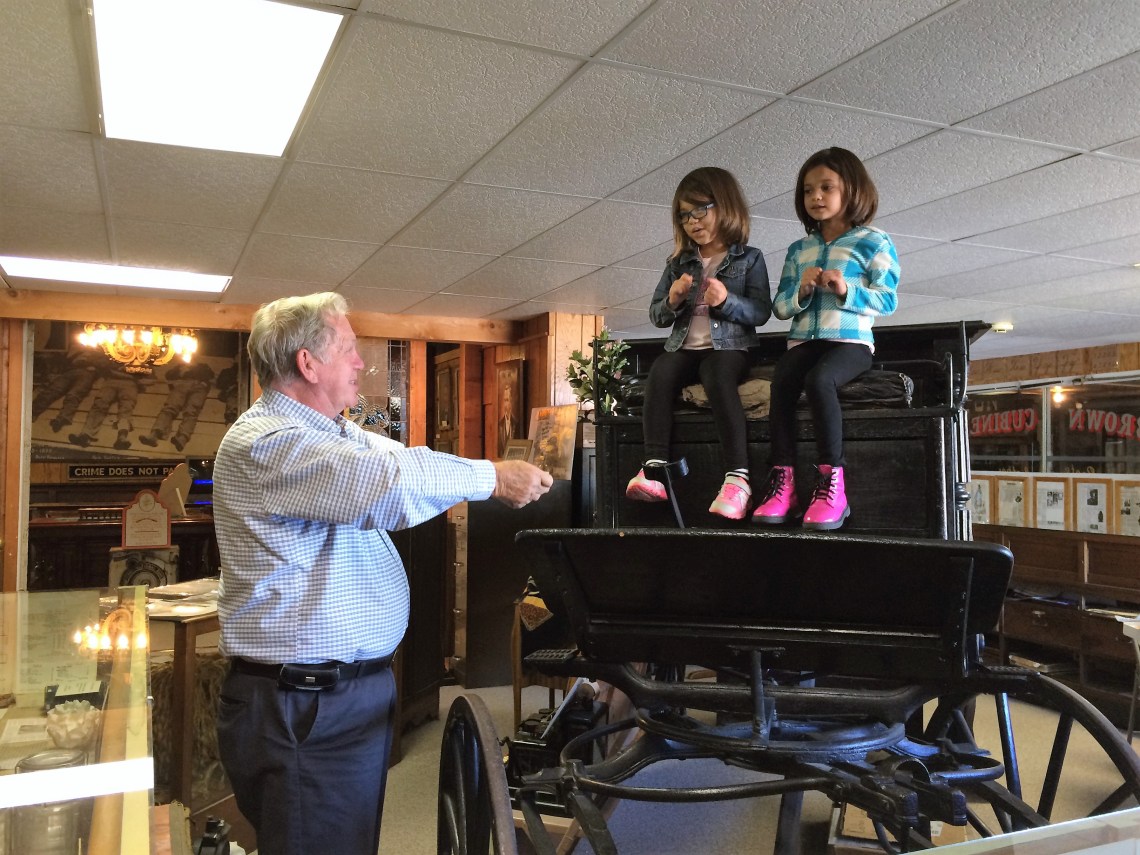
Magada let the girls weigh themselves on a one-cent scale, and she told them all about the old irons and how they were used. We learned about the history of Coffeyville, which was founded by Colonel James A. Coffey, and after a past of being a trading post, a railroad town, and then a cow town, became settled and incorporated in 1872.
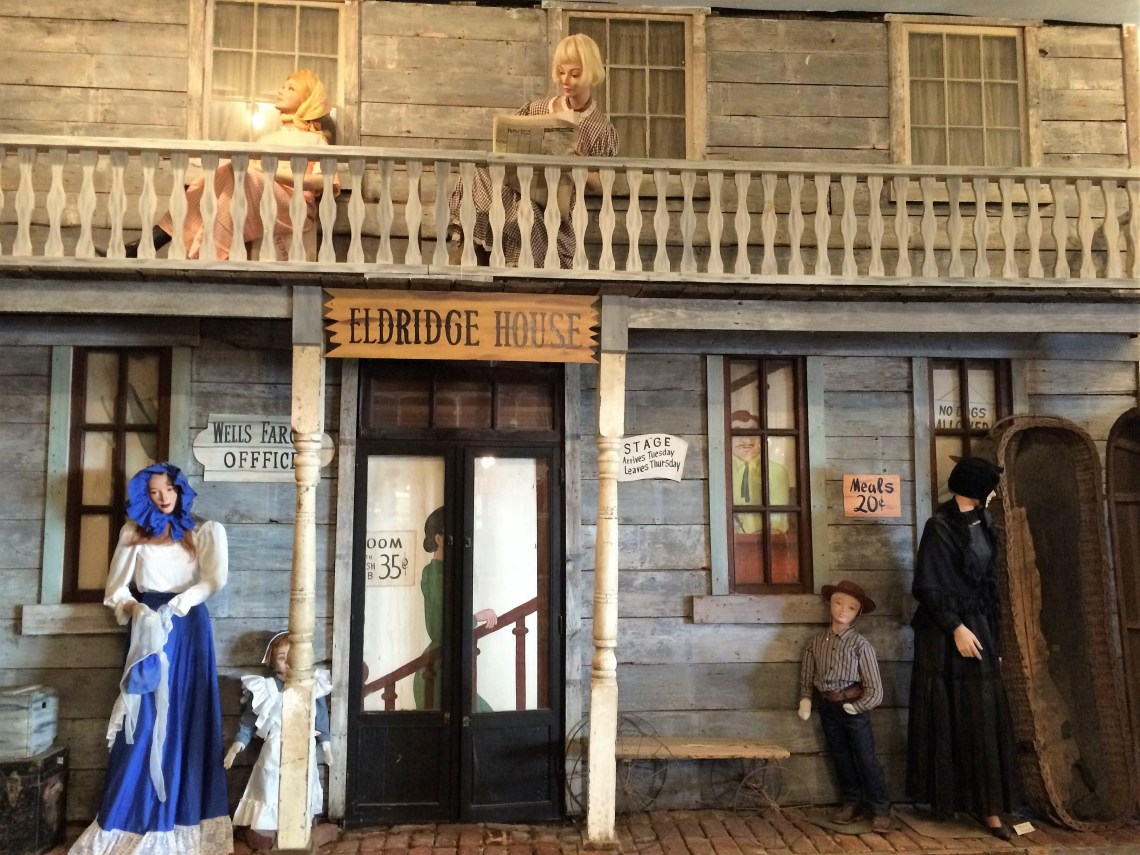
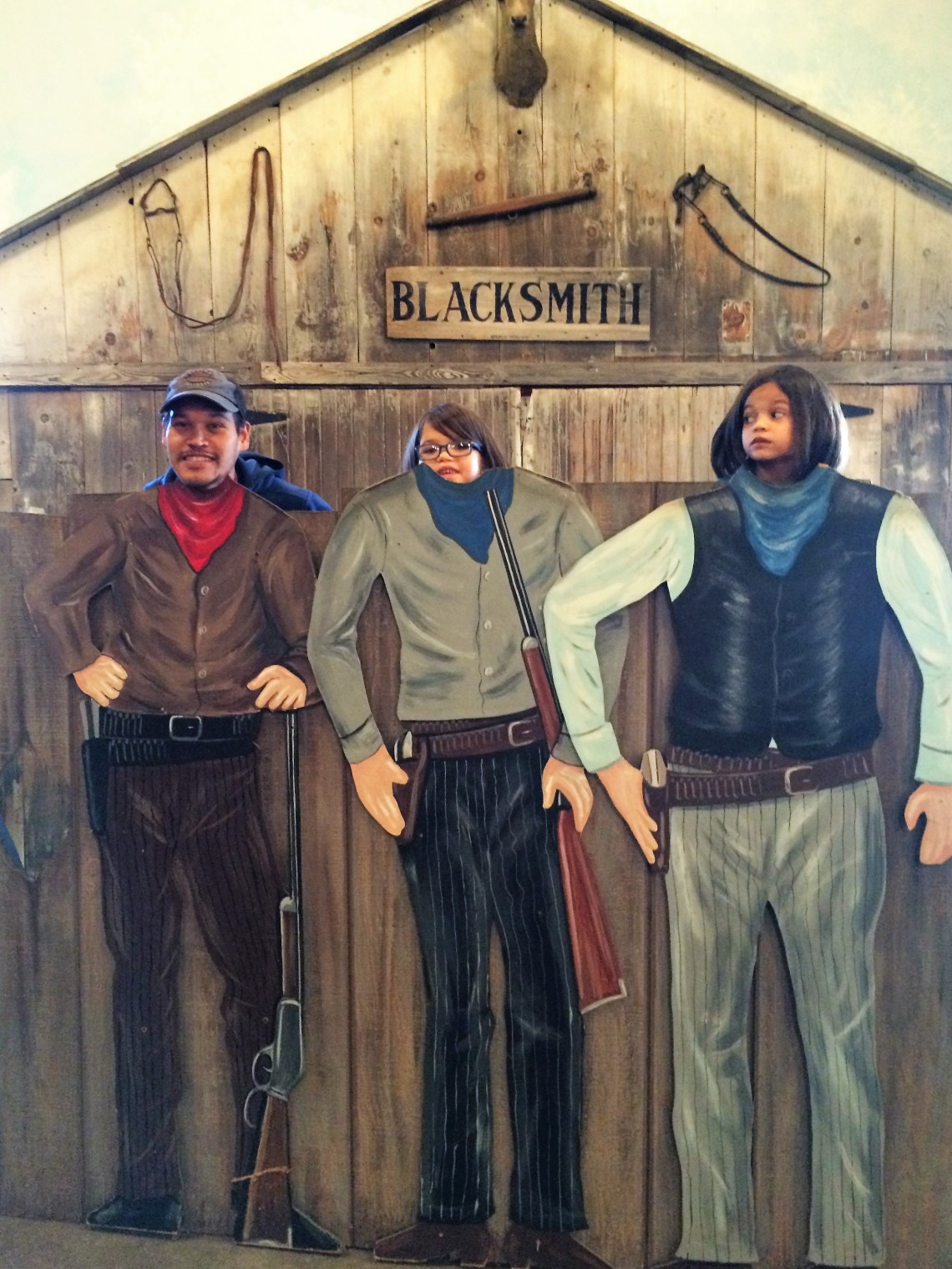
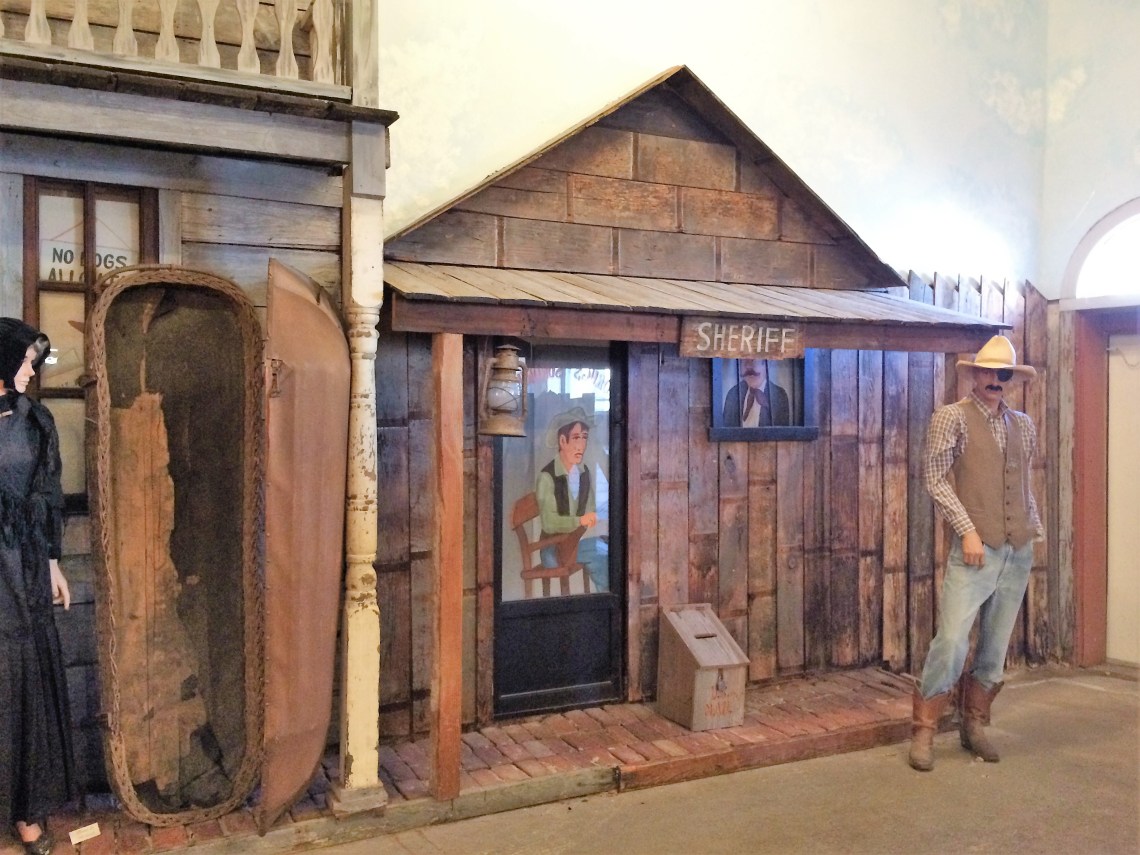
When we moved on to the room that featured the notorious Dalton Gang memorabilia, we began that portion of the tour with a film about what happened on that fateful day long ago. After we settled in for the 40-minute movie, Brent came in and brought the girls a bowl of popcorn to eat while watching.
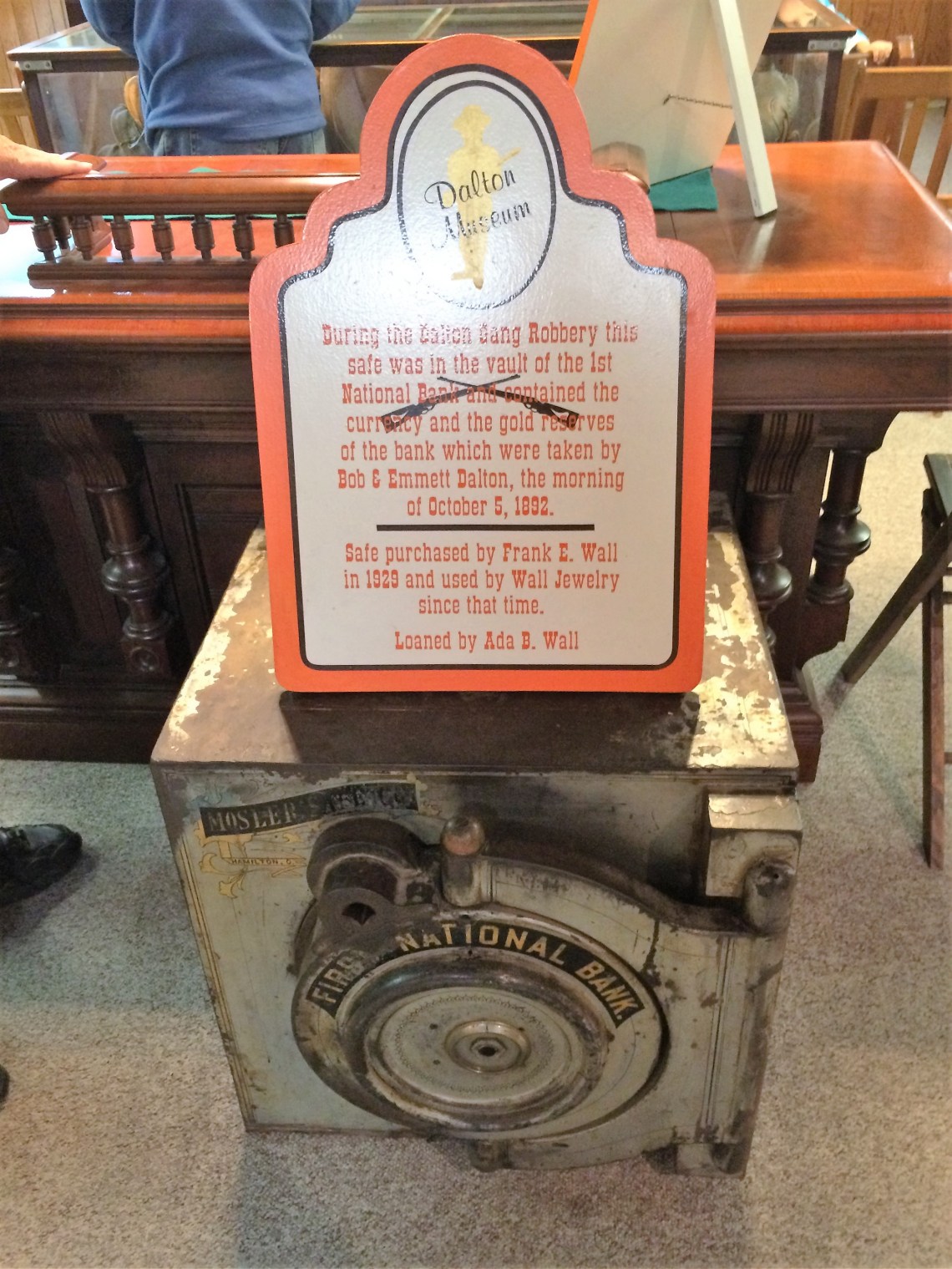
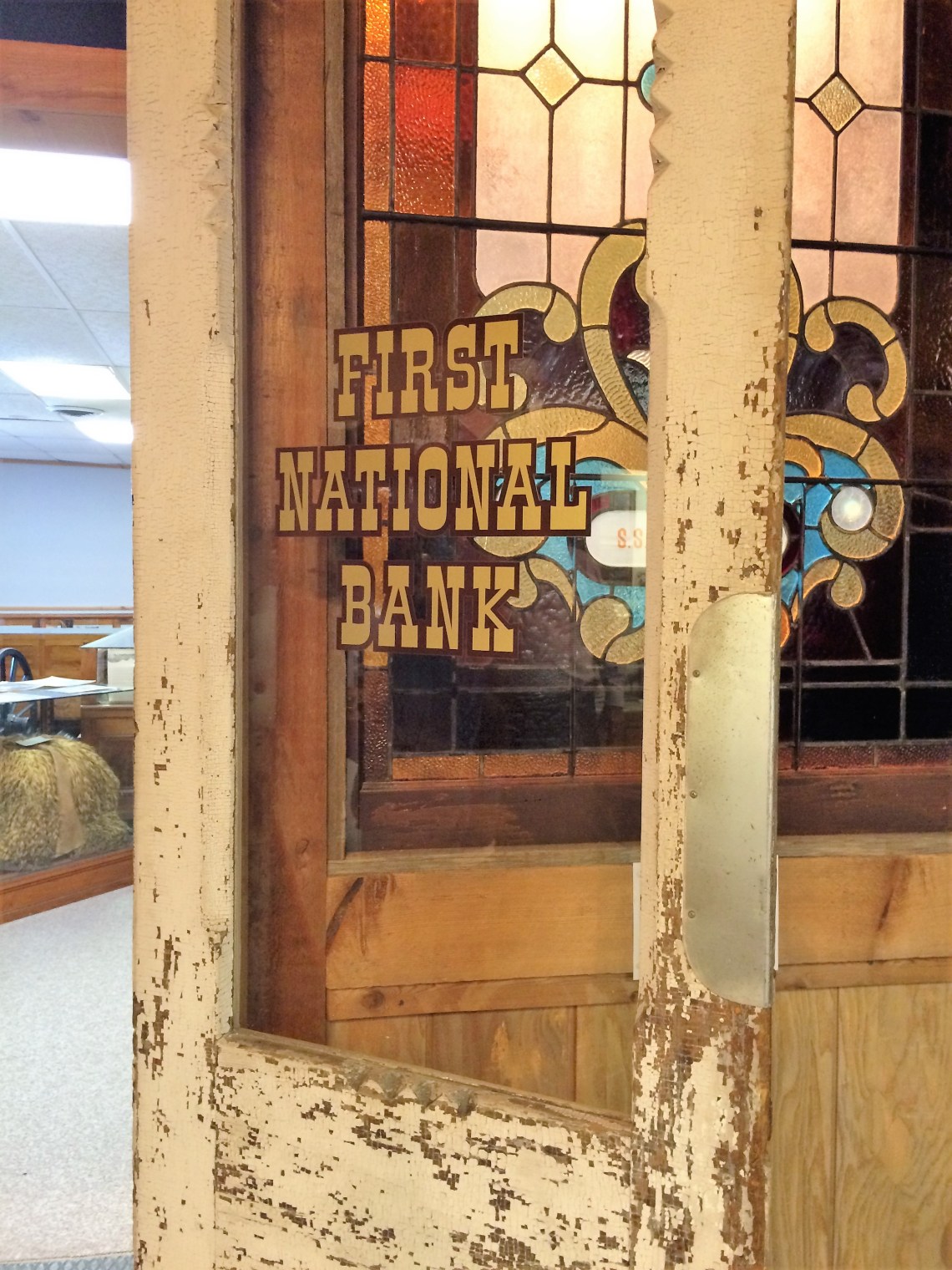
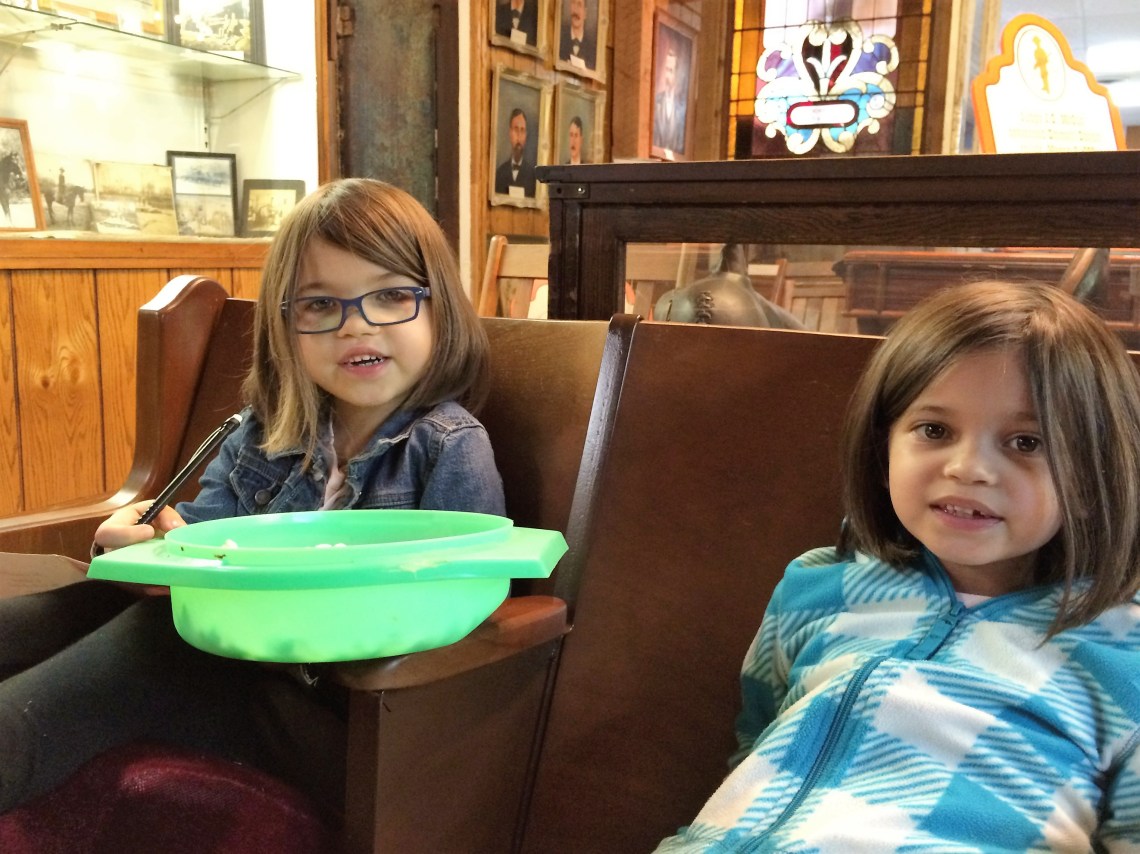 Following the movie, we looked around the room at original doors to one of the banks, the Dalton Gang horse saddles, funeral records, photos, guns, and other items that belonged to the outlaws.
We learned that the Dalton Gang members, who were known for train and bank robberies, went into Coffeyville with the intent of following through with the youngest member’s plans to “beat anything Jesse James ever did—rob two banks at once, in broad daylight.”
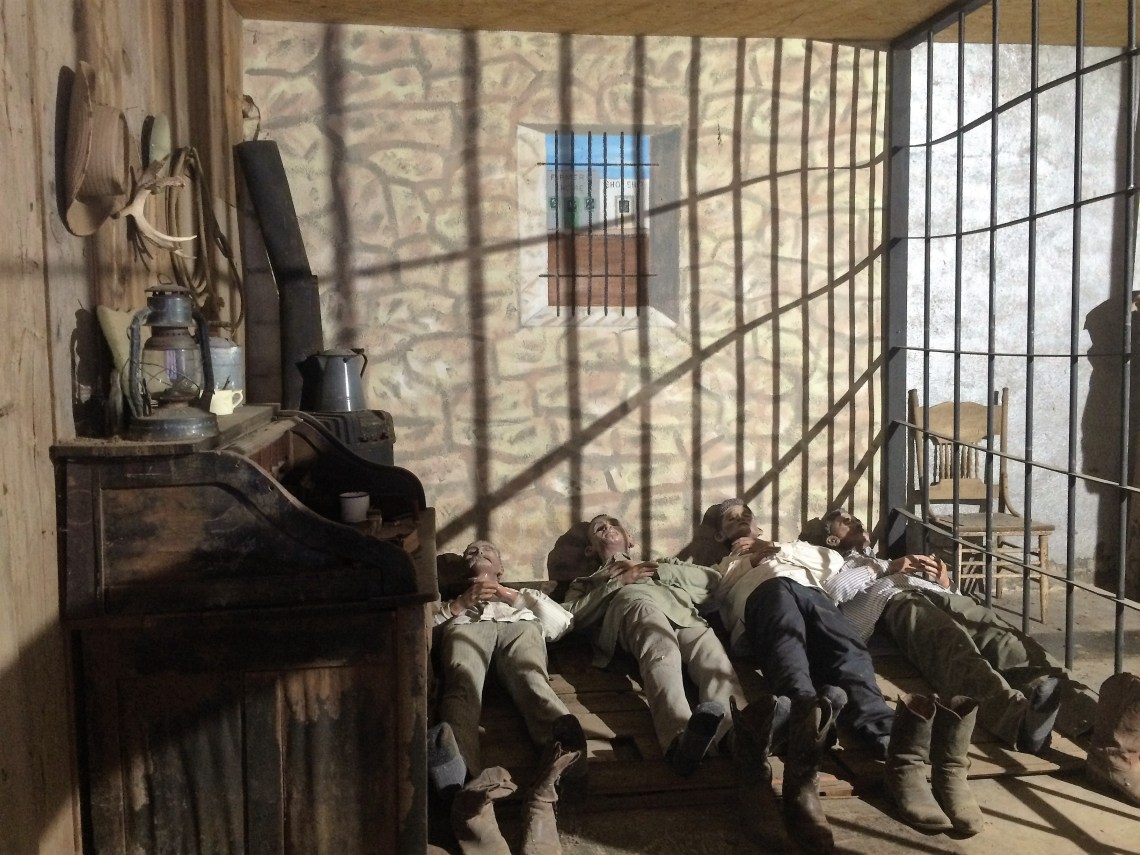
C.M. Condon & Company’s Bank and the First National Bank sat right across from each other, so the men hitched their horses, split up, and headed into the banks. What they didn’t expect was a town full of people ready to defend it. Someone recognized one of the Daltons when they first rode into town, and several townspeople armed themselves and were ready for the bandits. After a shootout in the street, four Dalton gang members and four townspeople were dead.
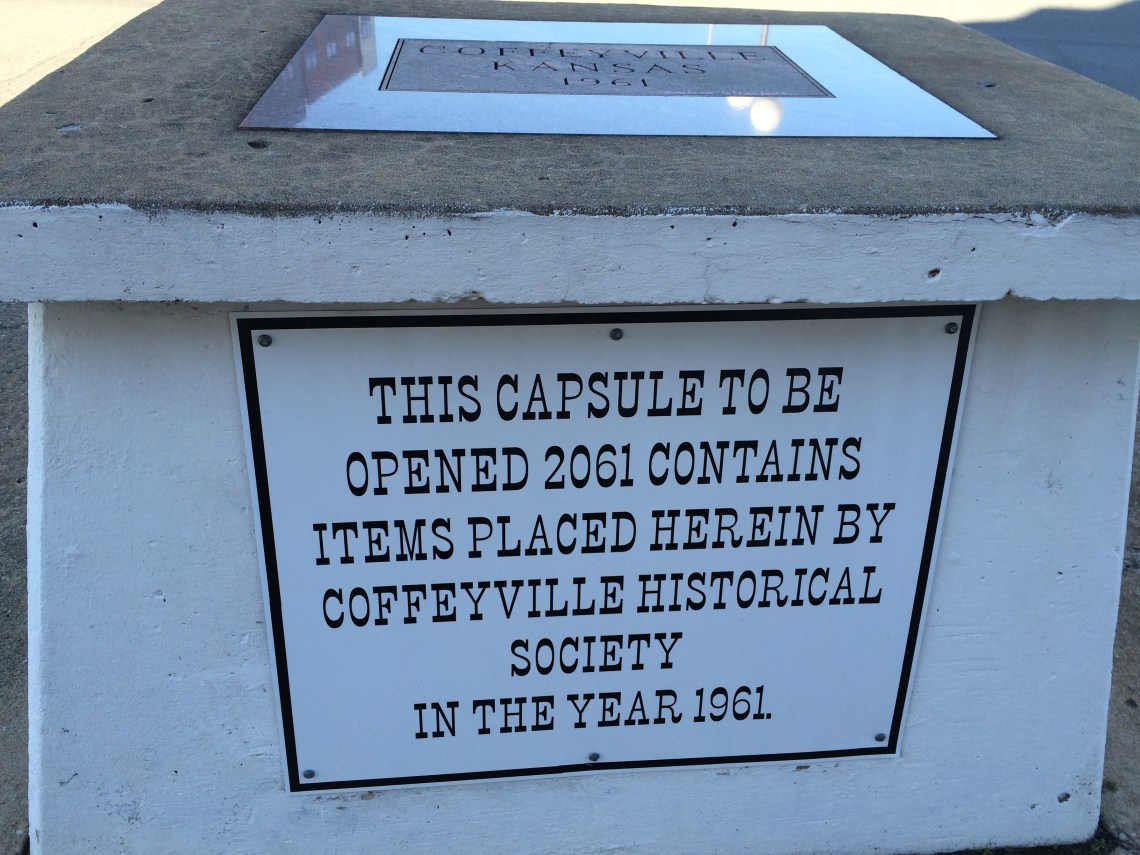
Upon leaving the museum, we spotted a time capsule and a mural of the historical sites in town.
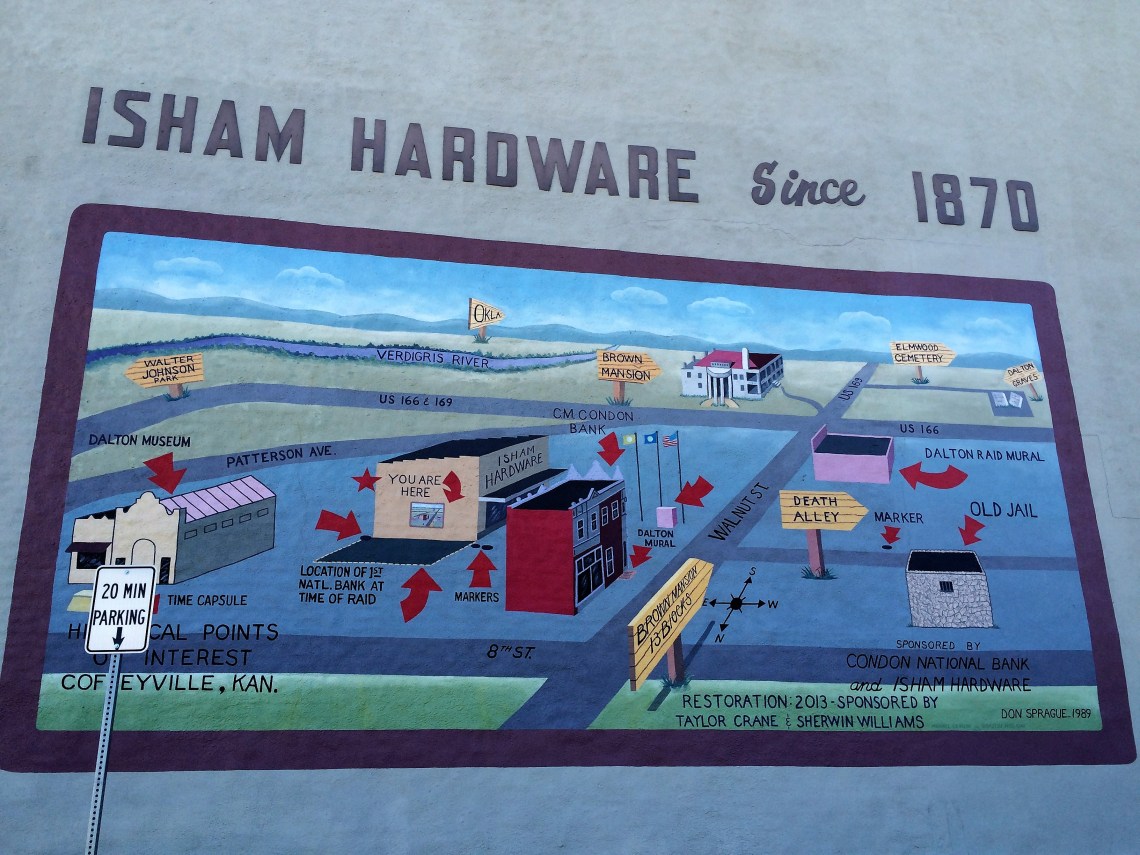
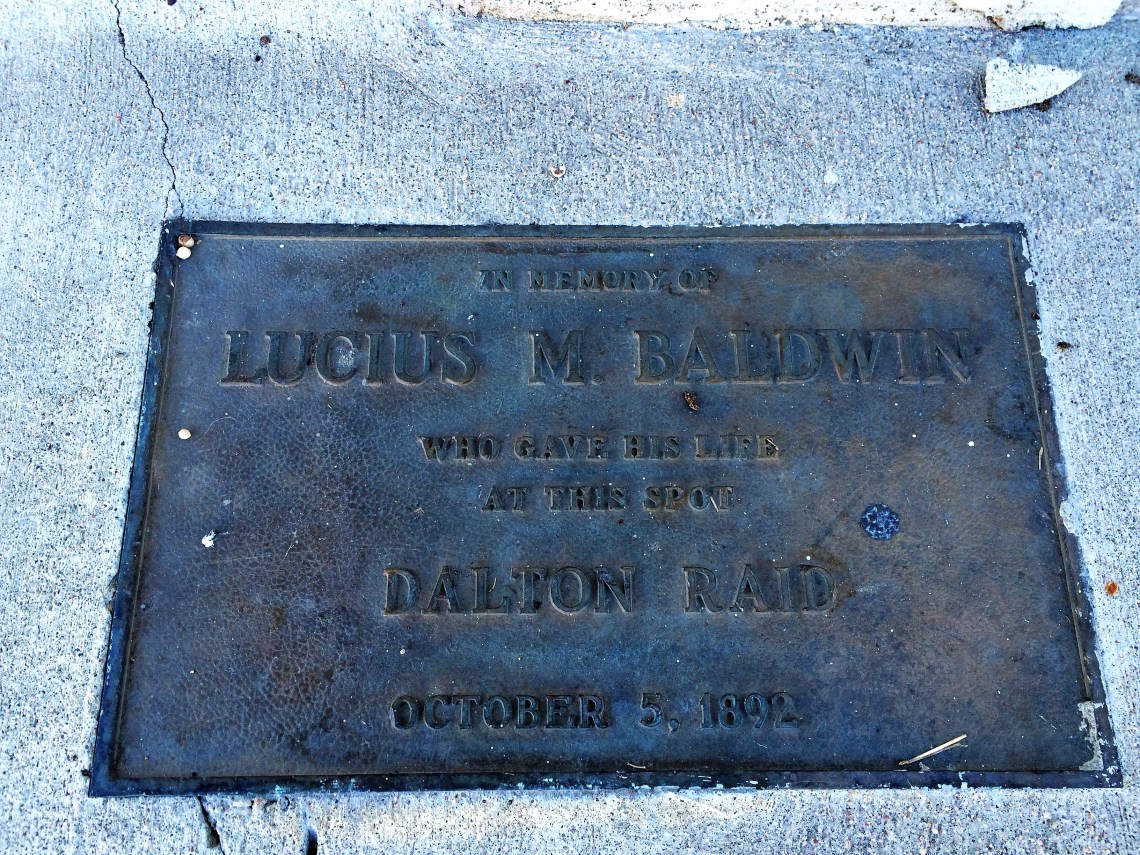
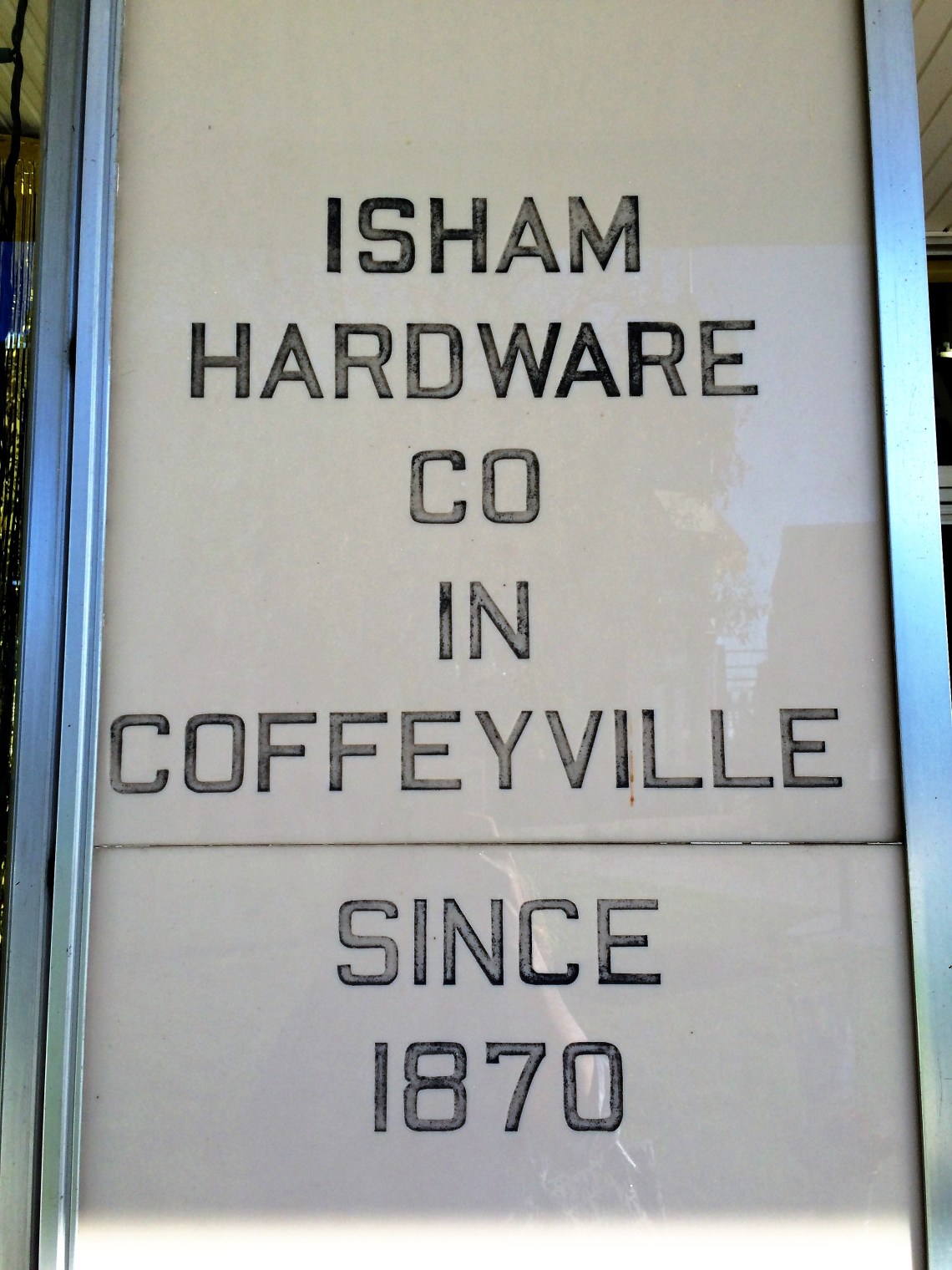
We walked over to Isham Hardware, where we found markers for the townspeople who lost their lives at the hands of the Dalton Gang.
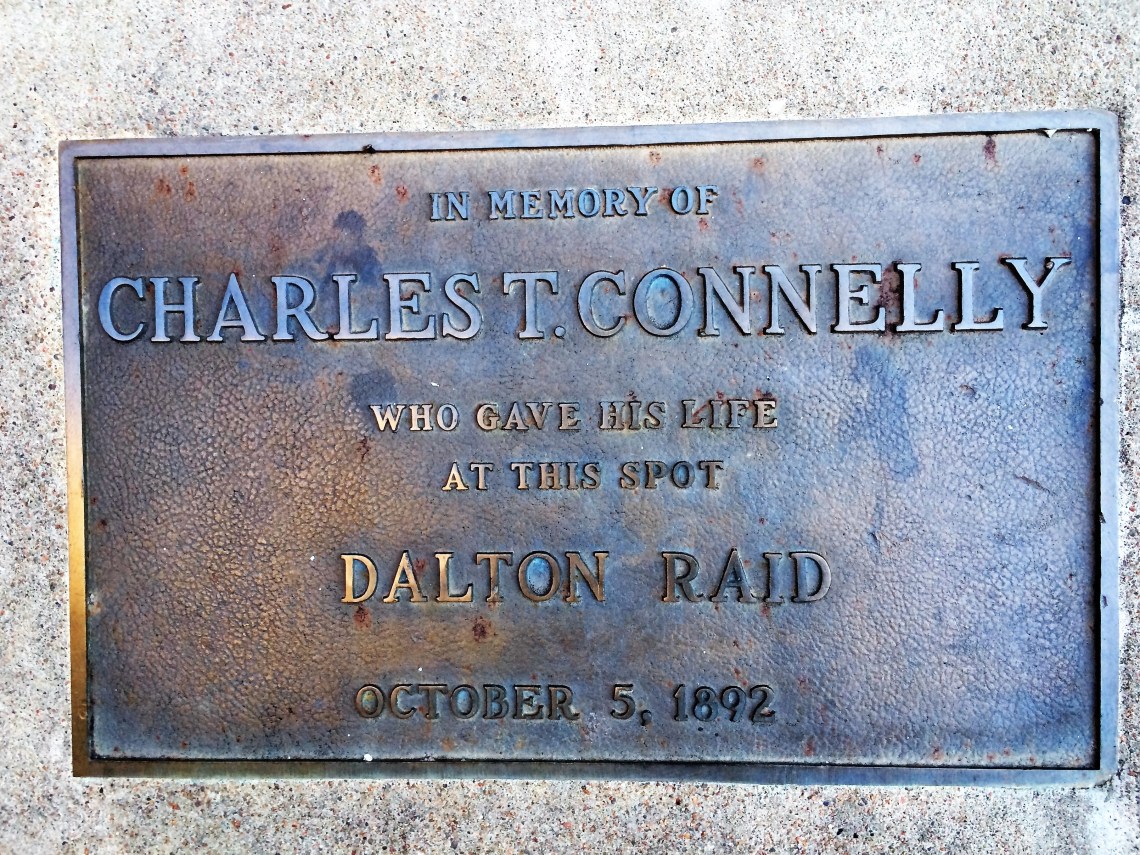
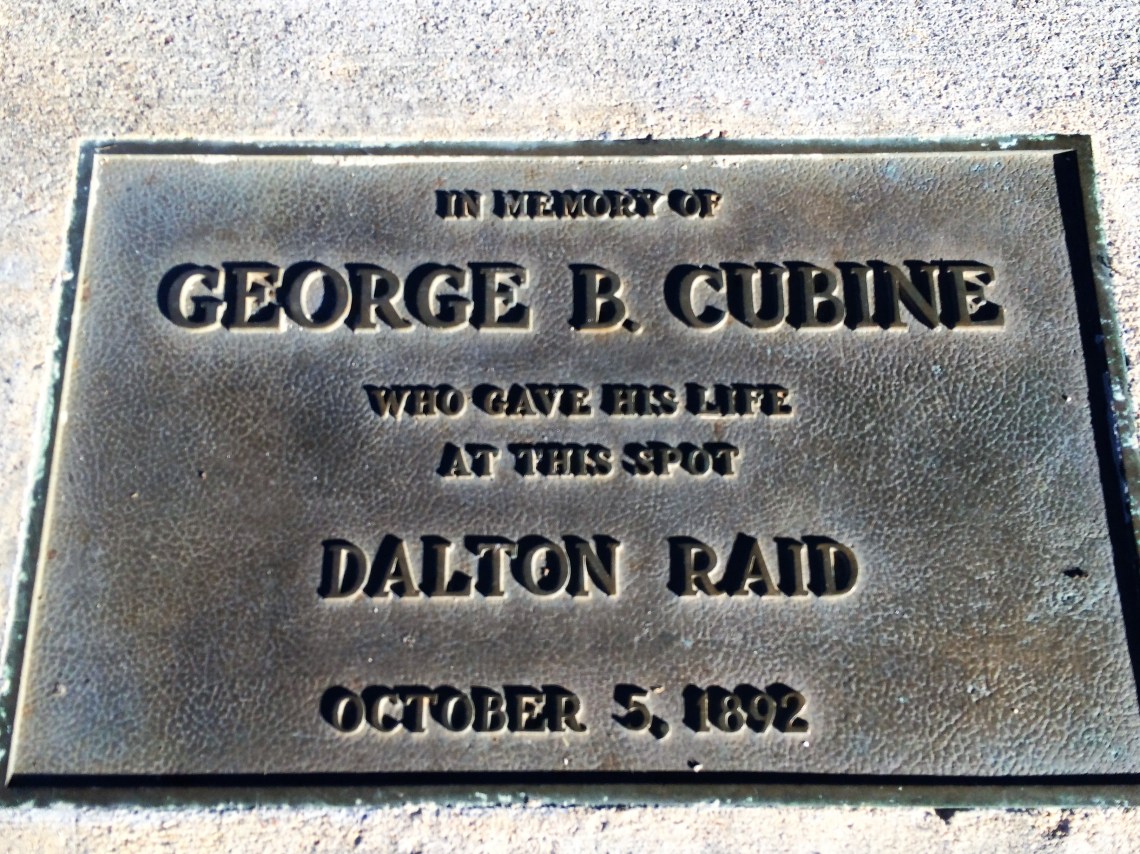
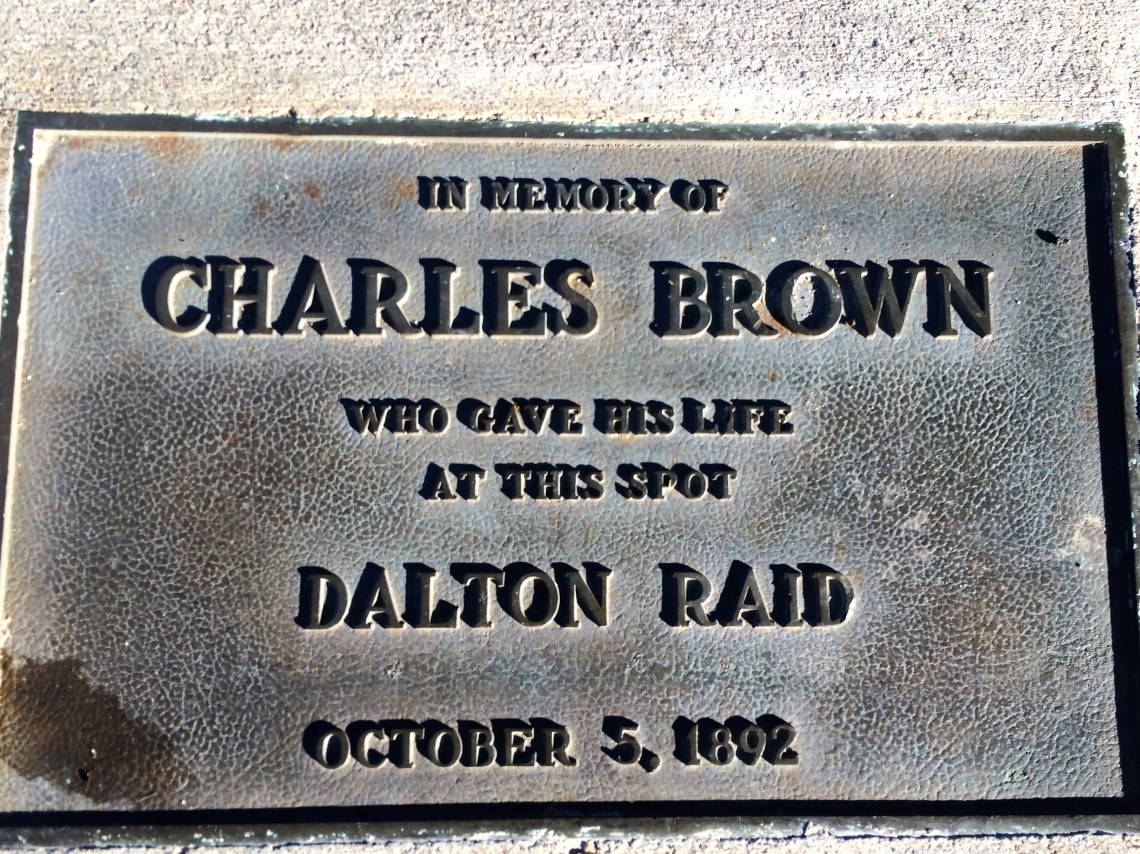
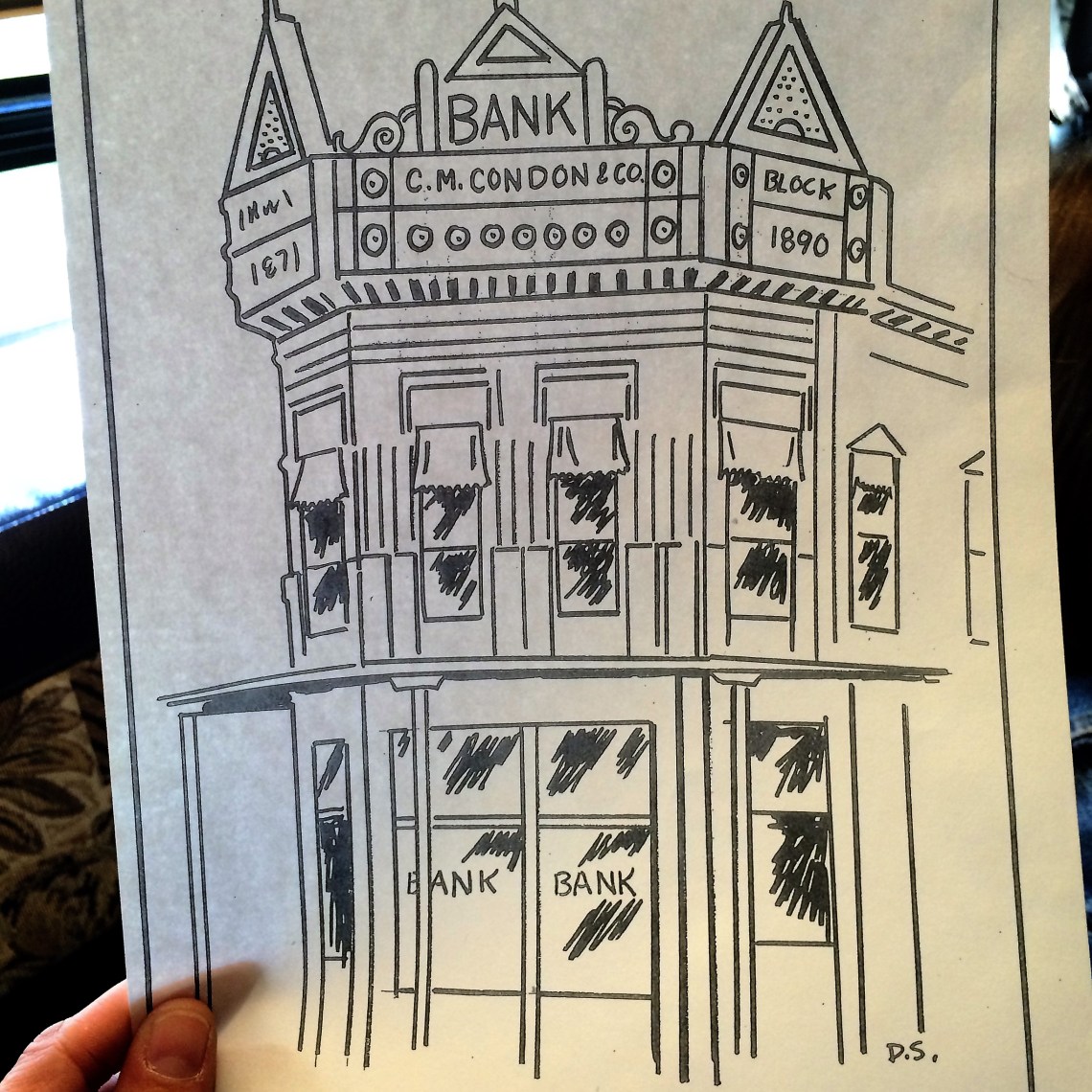
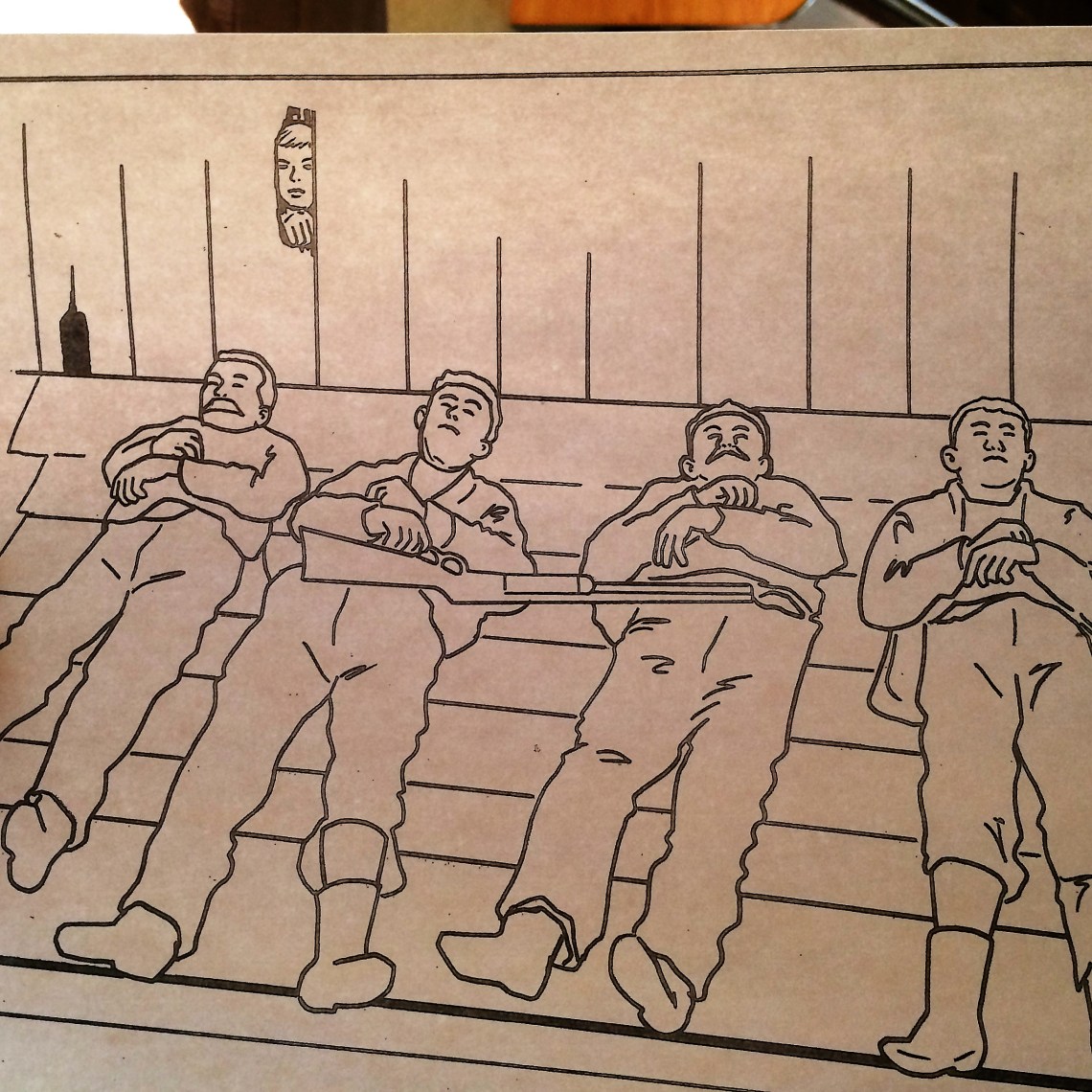
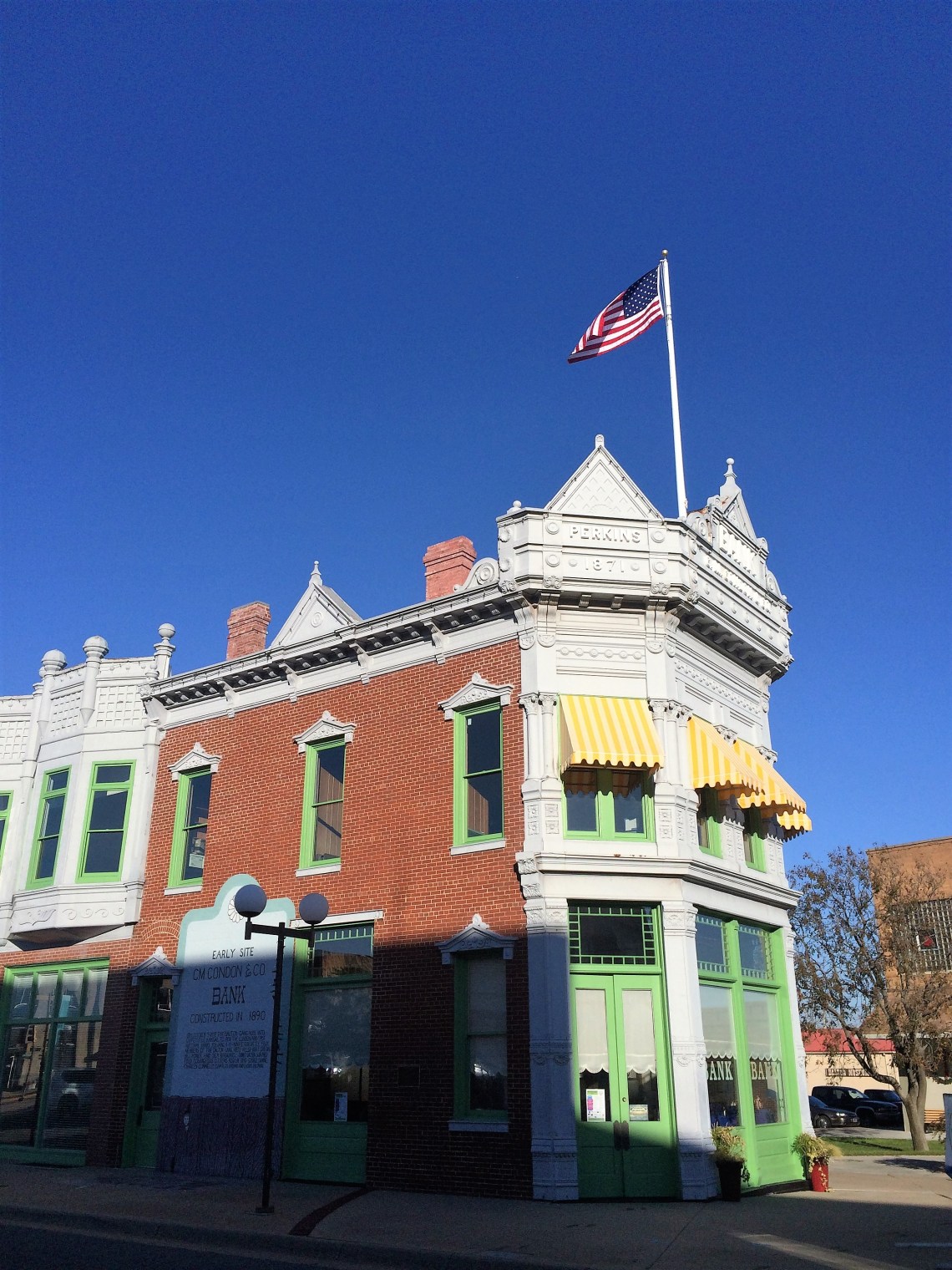
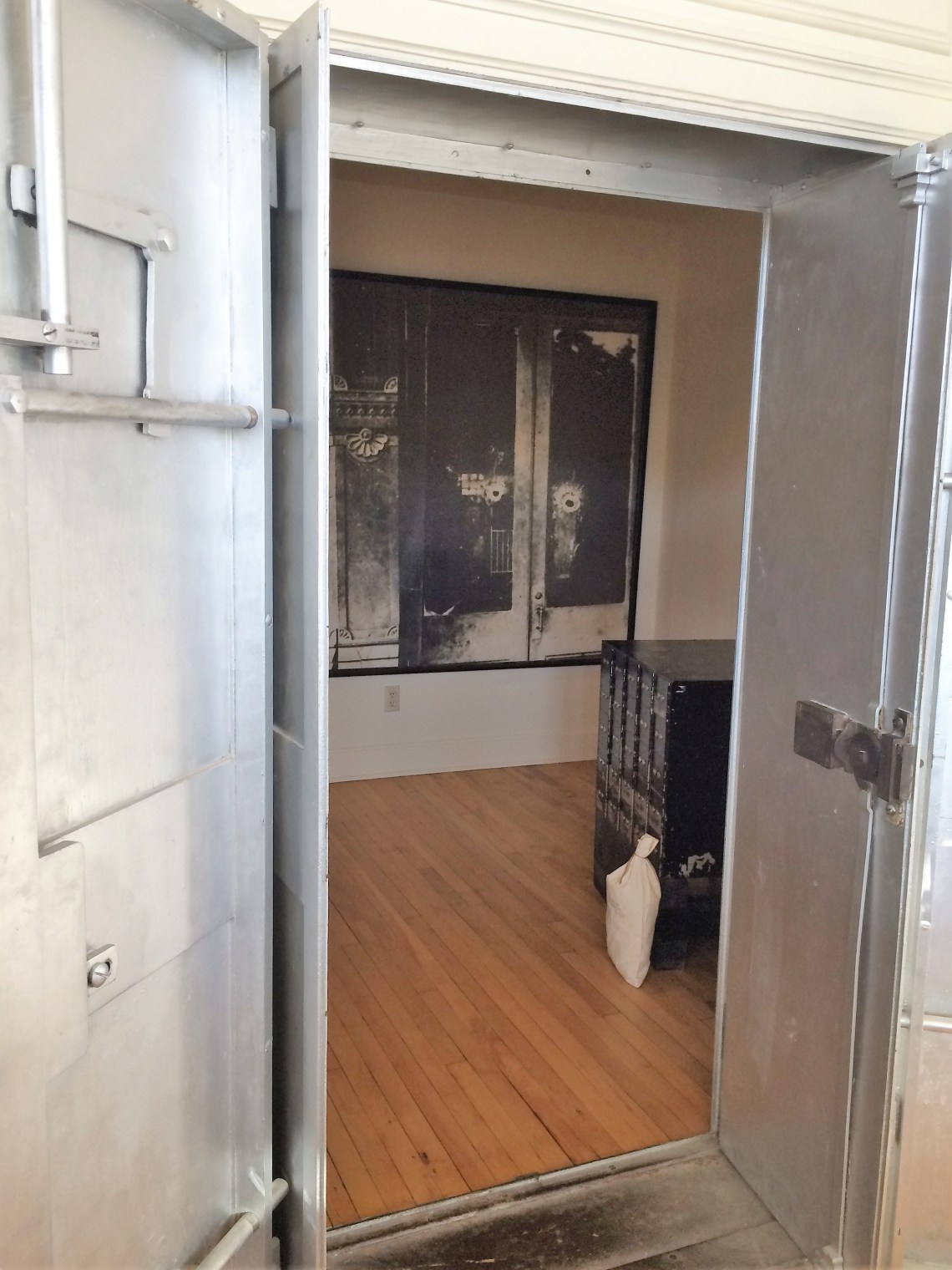
Just across the street, we found The Perkins Building (the original C.M. Condon & Company’s Bank location), now home to Coffeyville’s Chamber. Inside, the very friendly chamber members showed us around. We saw the bank’s vault and the teller windows, and they gave us a bag full of maps and brochures and some coloring sheets for the girls. Rayne and Jayden each got some stickers and a picture of the bank to color. Interestingly, they also had coloring sheets of the dead Dalton Gang, but we opted out of those.
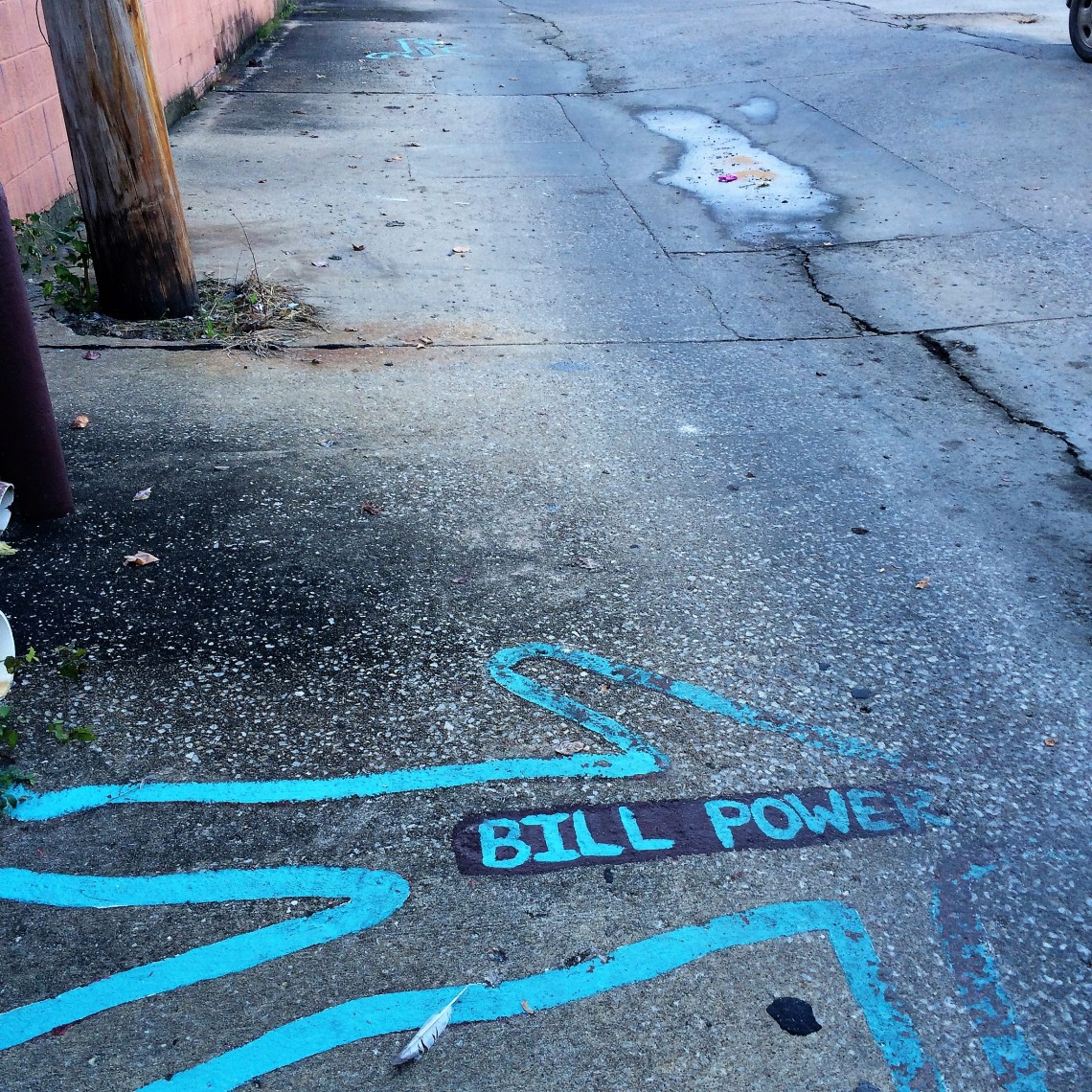
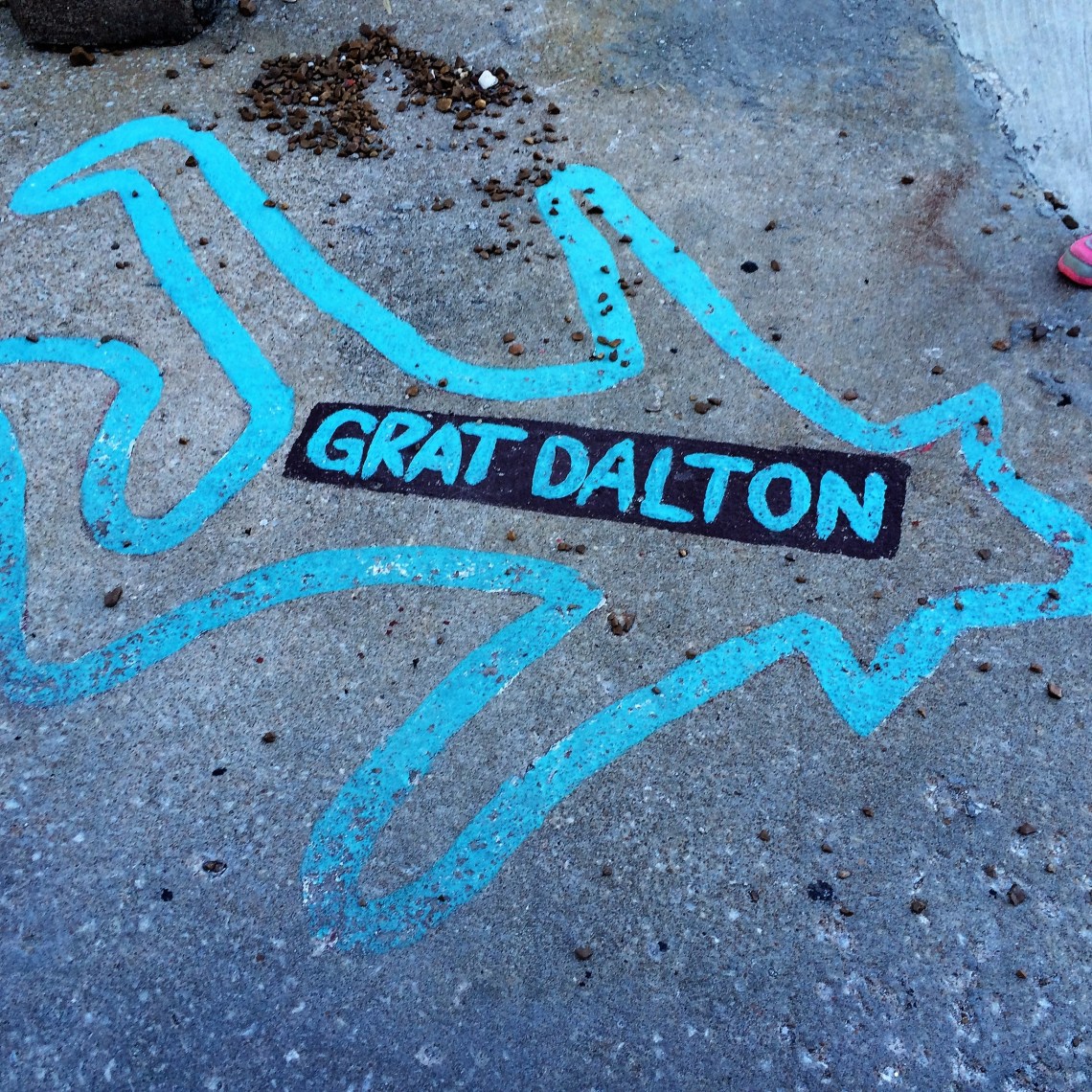
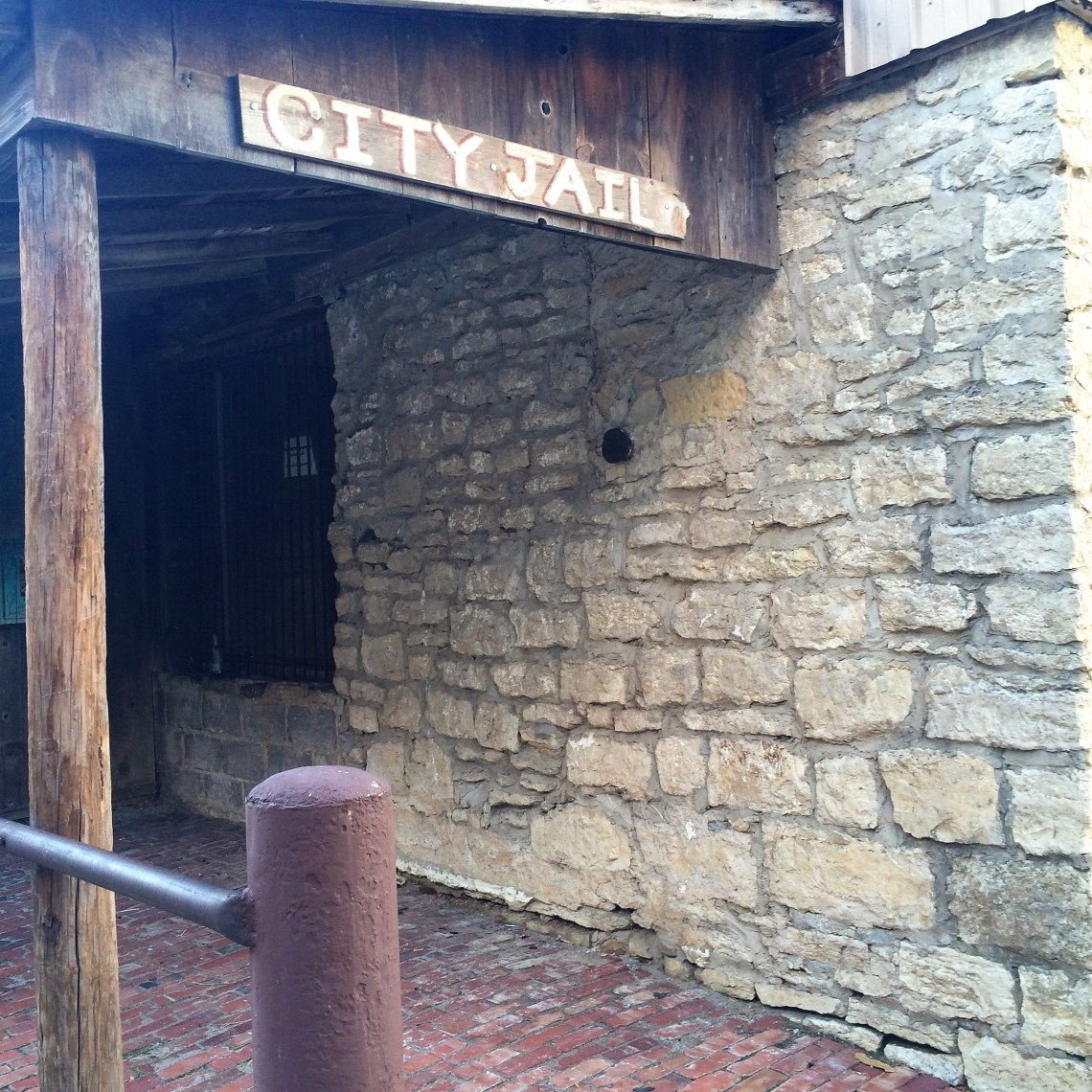
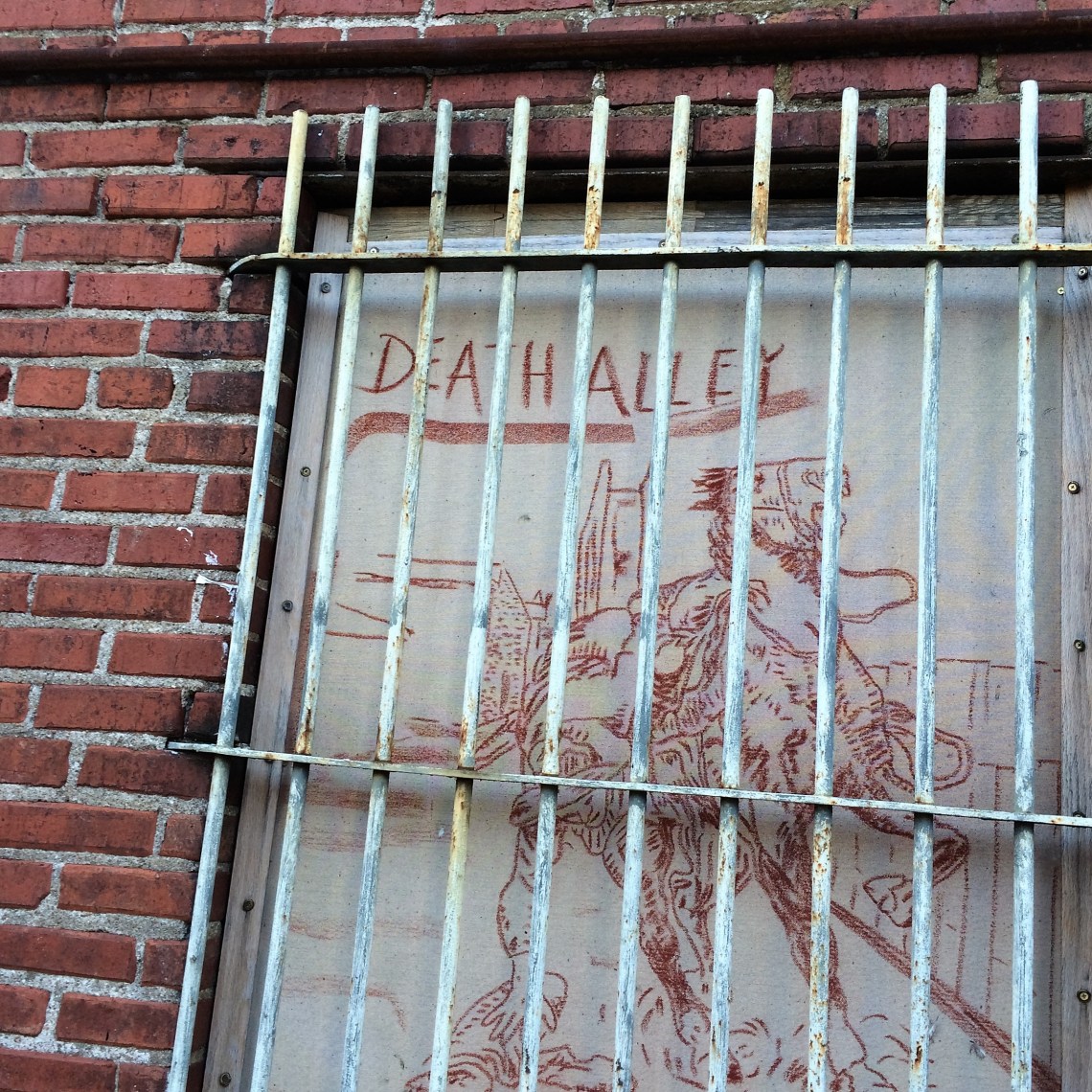
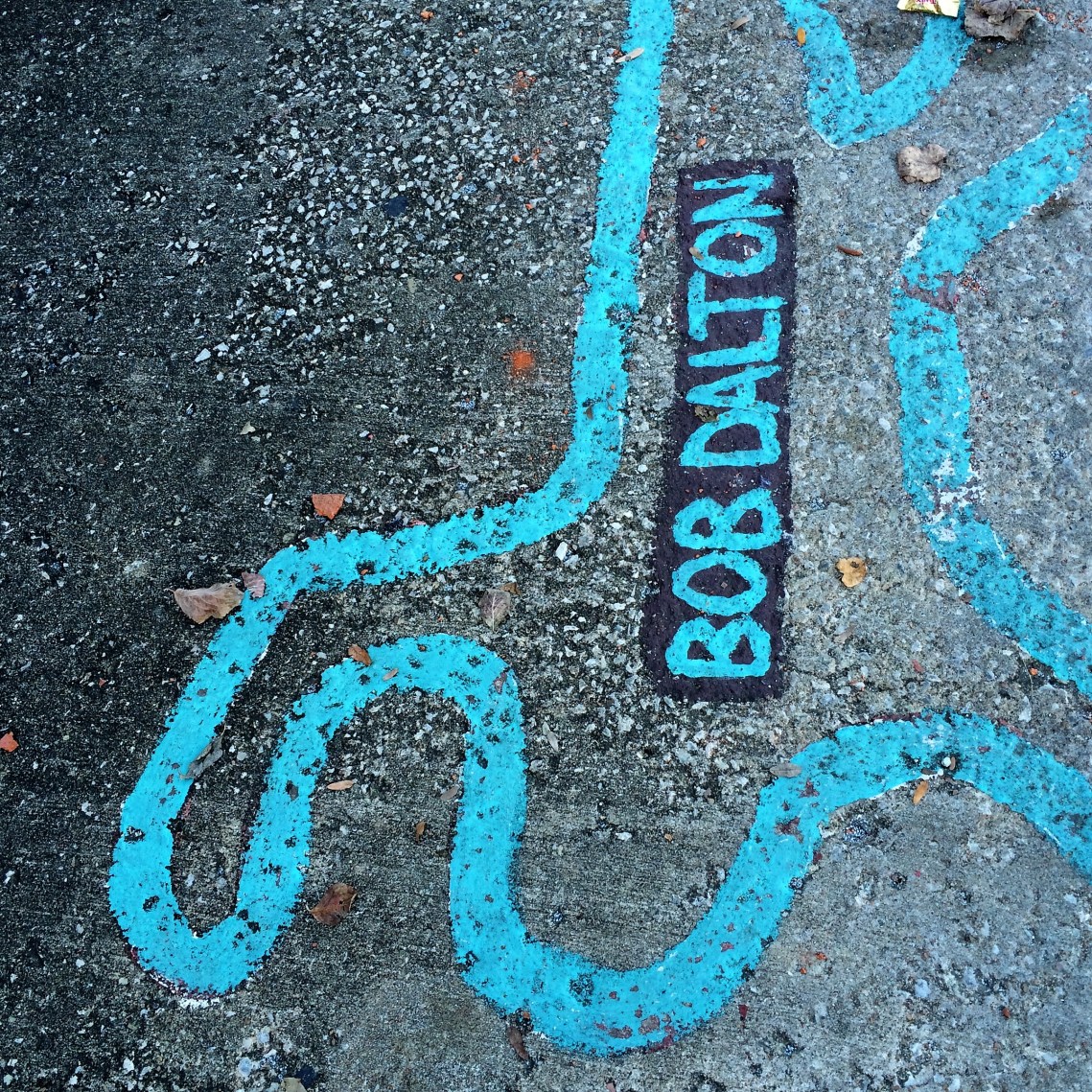
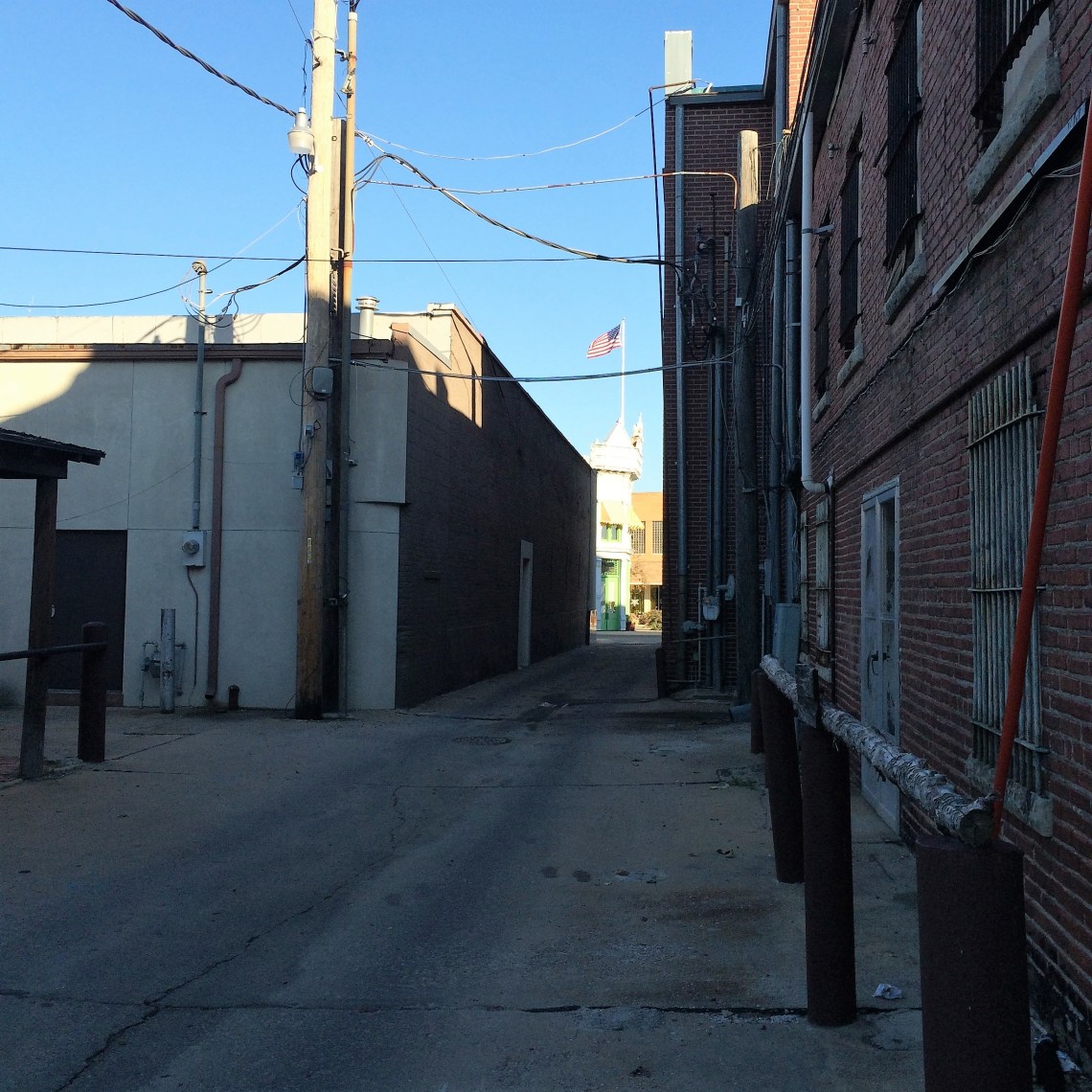
From the old bank, we crossed the street and headed to the City Jail, the original building where the bodies of the Dalton dead were held following the shootout. We also took a stroll down “Death Alley,” where three of the gang members died.
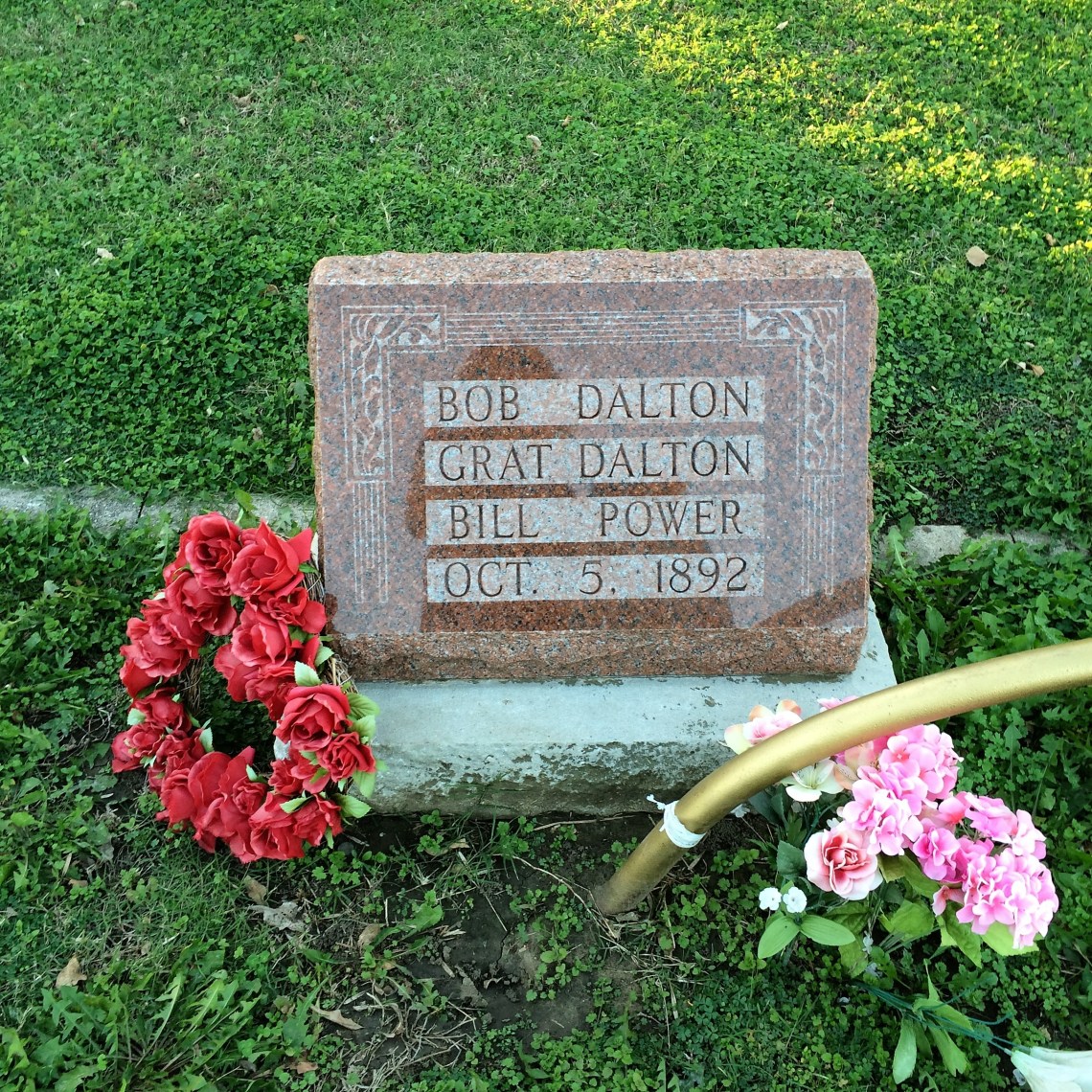
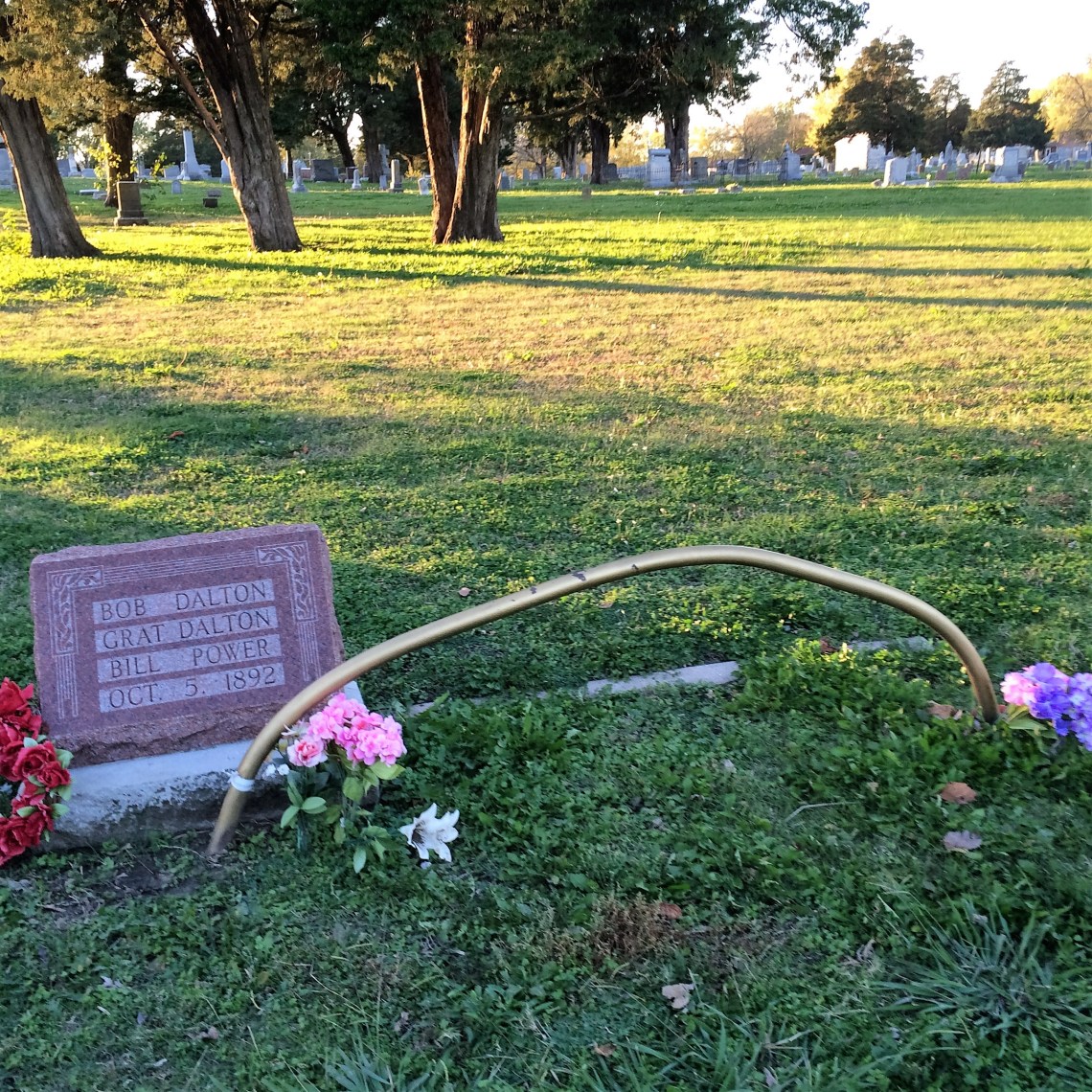
We couldn’t leave the area without making a quick stop at the Elmwood Cemetery to see where three of the Dalton Gang were buried. For years, the only grave marker they had was the hitching rail that they had tied their horses to the day of the attempted robberies. After the only member of the gang to survive that day was released from prison nearly 15 years later, he put up a headstone. The hitching rail still sits at the grave.
We spent a fascinating afternoon learning about an event that made a small town famous. Though historical outlaws are often glamorized and made to seem bigger than life, the real interesting part of this story was what the townspeople did. They banded together and said ‘Not today. Not in our town.’ And our kids met some interesting people, learned about a little piece of history, and got to see that crime really doesn’t pay!

 4ina5
4ina5 